WhoBuilt

Geometric algebra

Also known as Clifford algebra

Key facts

Built by
Anthony Lasenby, His interest in the framework helped introduce Joan Lasenby to it.
David Hestenes, Developed it as an applied tool and promoted the name geometric algebra.
Capabilities
Supports calculus on geometric objects and can make analytic differentiation easier.
Can express rotations and geometric relationships without relying on coordinate matrices.
Represents geometric objects and supports operations including addition, multiplication, and differentiation.

Timeline 5

Dated events, newest first. Open the sources under any item.

How we verify
Built2Capability3
20185 events
  1. as of Sep 2018Capability
    Supports calculus on geometric objects and can make analytic differentiation easier.
    “Because I have this algebra of objects, I can do calculus on them.” 21:26
    Unverified1 source· Talk
  2. as of Sep 2018Built
    Anthony Lasenby built Geometric algebra
    His interest in the framework helped introduce Joan Lasenby to it.
    “Anthony became fairly obsessed with geometric algebra.” 10:51
    Unverified1 source· Talk
  3. as of Sep 2018Capability
    Can express rotations and geometric relationships without relying on coordinate matrices.
    “I don't have matrices, so I don't have to worry about coordinate systems.” 20:11
    Unverified1 source· Talk
  4. as of Sep 2018Built
    David Hestenes built Geometric algebra
    Developed it as an applied tool and promoted the name geometric algebra.
    “David Hestenes came along in the 1960s and said ... 'I'm going to call it geometric algebra.'” 3:00
    Unverified1 source· Talk
  5. as of Sep 2018Capability
    Represents geometric objects and supports operations including addition, multiplication, and differentiation.
    “I have an algebra that takes these things as objects, and I can add them, multiply them, and differentiate with respect to them.” 5:01
    Unverified1 source· Talk

Talks 1

50:49
Applications of Geometric Algebra in Engineering

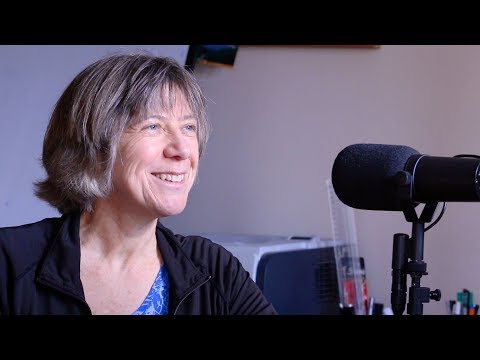
Joan Lasenby introduces geometric algebra, tracing its roots to Grassmann and Clifford and describing how David Hestenes developed it as a practical mathematical language. She explains how it represents geometric objects such as lines, planes, and rotations, and why this can make problems in computer vision, graphics, physics, and engineering easier to express and solve. Examples include reconstructing scenes from moving cameras, working with rotations, and modeling circles and spheres in conformal geometric algebra. She also discusses the approach’s learning curve, its growing tools and community, and where it may prove useful.

Sep 17, 2018· 51 minDiscussed 0:57