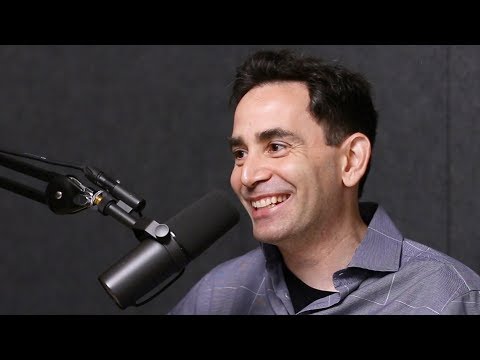
Harj says young founders often wonder whether they need work experience before starting a company. Garry describes turning down Peter Thiel’s offer to join an early company because he valued his Microsoft job and health insurance; he says the decision cost him a major opportunity. He and the others argue that large-company experience can teach politics and slow habits more than useful startup skills.
Why This Is The Perfect Time To Start A Startup
Speakers
YC partner Harj Taggar, with Garry Tan, Diana, and Jared from the Lightcone Podcast, discusses why college students and other young founders may have advantages starting companies at Startup School East in Boston.
The panel says founders with big-company experience may need to relearn how quickly they can ship. Jared says he has never had a traditional job, and the panel points to Stripe’s Patrick and John Collison and Dropbox’s Drew Houston and Arash Ferdowsi as founders who focused on startups from a young age. They argue that setting a high bar for the product and team is easier when founders define it themselves.
The panel frames company building as a long game: sustained growth can compound over decades. One example they give is 3x annual growth for 24 years, which they say could produce $200 billion in revenue. They argue that companies aiming to become major institutions need time to grow and may need to catch several technology waves.
The panel says the share of YC founders who were college students rose from 10% two years earlier to 30%, and attributes the shift to AI. They say AI has created many new startup ideas and changed the startup idea maze, so assumptions that used to block a path to product-market fit may no longer hold. They also recall that YC funded 10% of attendees at a college event the previous year.
Takeaways
- Treat work experience as optional; judge it by what you will learn and build, not by the credential.
- Ship a small version quickly to test whether customers want it.
- Set a clear product quality bar and bring in people who can meet or raise it.
- Think in years: sustained growth and learning can compound.
- Explore AI opportunities by testing ideas with real users; changing technology can open paths that were previously blocked.
Mentioned in this talk
 Y Combinator
 Microsoft
 PayPal
 Palantir
 Intel
 Google
 Meta
 Stripe
 Dropbox
 Apple Computer
 Scale AIPosterous
 GmailFriendFeed
 AIlarge language modelsMake something people wantCompounding growthWork-life balanceproduct-market fitPeter ThielPaul BuchheitDrew HoustonPatrick CollisonArash FerdowsiJohn CollisonAlexandr Wang
Search inside this talk
What was claimed 14
- foundedco-founder
“founder of Posterous”
0:00inDesign for StartupsYouTube Verified3 sources· Talk
- previously at
“working for Microsoft cost me $200 million”
YouTube Verified2 sources· Talk, Web· archived
- builtPaul Buchheit builtGmailcreator, original lead developer
“he's known as the inventor of Gmail”
0:03inPaul BuchheitYouTube Verified11 sources· Talk, Web· archived
- foundedAlexandr Wang foundedScale AICo-founder, former CEO
“how you dropped out of MIT and ended up starting Scale”
1:31inAlexandr Wang: Building Scale AI, Transforming Work With Agents & Competing With ChinaYouTube Verified4 sources· Talk, Web· archived
- foundedArash Ferdowsi foundedDropboxCo-founder
“He found Arash, who would later be Dropbox's CTO and his co-founder.”
6:04inHow to Find the Right Co-founderYouTube Verified3 sources· Talk, Web· archived
- foundedDrew Houston foundedDropboxCo-founder, CEO (announced in May 2026 he will become executive chairman and co-CEO with Ashraf Alkarmi)
“you were in Y Combinator with Dropbox in the summer of 2007”
0:05inHow to Build the FutureYouTube Verified5 sources· Talk, Web· archived
- foundedJohn Collison foundedStripePresident
“My brother John and I started working on it full time in 2010.”
0:13inRunning Your CompanyYouTube Verified4 sources· Talk, Web· archived
- foundedPatrick Collison foundedStripeCEO
“Patrick is the co-founder and CEO of Stripe.”
0:00inRunning Your CompanyYouTube Verified5 sources· Talk, Web· archived