Oracle logs can contain errors that are routine, harmless, or hard to interpret on their own. Their meaning can depend on the database version, platform, patches, settings, and topology, making investigation difficult for administrators who lack fleet history.
Has This Happened Before? Queryable Memory for Database Logs
Speaker
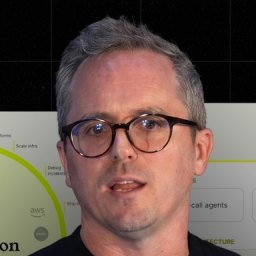
David Budáč, an Oracle database consultant working with a large Czech bank, presents a log analysis system at Agent Conf 2026 for helping administrators investigate database errors under strict on-premises and inference constraints.
The system sends logs from roughly 300 databases to Elasticsearch, then processes them in an on-premises logbook. It uses deterministic steps and local models for ingestion and classification, with limited cloud research on anonymized data. A Git-backed Markdown wiki stores the findings, while a workbench helps administrators use and update them.
The wiki brings together raw logs, generated research, and an administrator journal of actions and changes. Agents classify and research errors, while administrators can add context and ask follow-up questions. The workbench lets them view incidents by database, error, or timeline, which can reveal related failures across shared infrastructure.
Because local inference has limited memory, Budáč uses Python scripts to compact and group repeated events before sending manageable context to a model. The wiki uses Markdown with metadata so people can read and query it. Research agents prioritize curated sources, and an administrator reviews proposed additions weekly.
The system can monitor whether a fixed error returns and mark it solved after eight weeks without recurrence; residual risk tracking is still experimental. Budáč identifies small local models, incident storms, and possible prompt injection through web research as concerns. A future idea is to let a remote agent request more local information, with human approval to prevent leaks.
Takeaways
- Use deterministic filtering and grouping to reduce the context sent to small models.
- Keep sensitive logs on premises and anonymize anything sent to a cloud model.
- Store incident findings and administrator actions together so later investigations can use the history.
- Show incidents by resource, error, and timeline to spot problems shared across infrastructure.
- Curate research sources and review new candidates before relying on them.
Mentioned in this talk


Search inside this talk
What was claimed 12
- metricO2 Bank: Largest bank in the Czech Republic
“It's the largest bank in the Czech Republic”
YouTube Unverified1 source· Talk
- role atDavid Budáč is consultant at O2 Bank
“currently consulting for a big bank”
YouTube Unverified1 source· Talk
- role atDavid Budáč is Oracle database consultant at
 Oracle
“I'm an Oracle database consultant”
YouTube Unverified1 source· Talk
- uses
 Elasticsearch uses Logbook
“database hosts ship the logs to Elasticsearch”
YouTube Unverified1 source· Talk
- usesLogbook usesElasticsearch
“The databases produce logs and send them to Elasticsearch”
YouTube Unverified1 source· Talk
- usesKnowledge graph uses Git
“everything is done through Git”
YouTube Unverified1 source· Talk
- usesLogbook uses Knowledge graph
“The outcome of this is what I call the wiki”
YouTube Unverified1 source· Talk
- uses
 Anthropic Console uses Git
“It helps them work with Git”
YouTube Unverified1 source· Talk
- usesLogbook uses Nemotron 3.5 Fast
“the fastest model that worked best was Nemotron 3.5 Fast”
YouTube Unverified1 source· Talk
- uses
“For this, it's simple telemetry and Langfuse”
YouTube Unverified1 source· Talk
- featureLogbook: Groups repeated events into compacted summaries before model processing
“if we have a storm of events that are all the same at the same time, I group them”
YouTube Unverified1 source· Talk
- featurecurated research sources: Sources are reviewed weekly by an administrator
“an administrator has to review it weekly”
YouTube Unverified1 source· Talk