Steinberger says OpenClaw stood out because it runs on a user's computer, where it can work with the files and tools available there. That access let it surprise users, such as by finding old audio recordings and turning them into a narrative of someone's year.
OpenClaw Creator: Why 80% Of Apps Will Disappear
Speaker
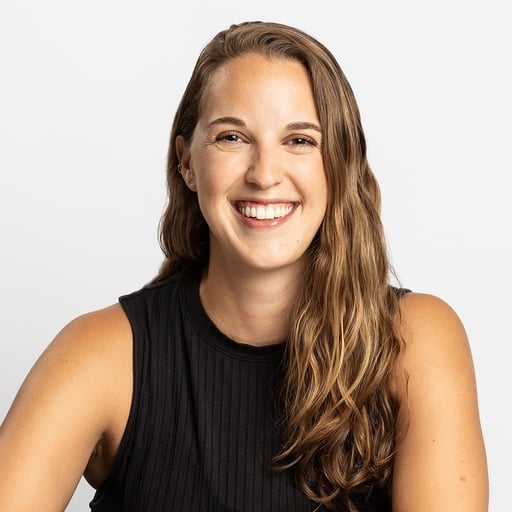
Peter Steinberger, creator of OpenClaw, talks with Y Combinator about building a computer-based personal AI agent and what agents could change for software and builders.
Steinberger built an early version by connecting WhatsApp to Claude Code, then added image support. While traveling in Marrakech, he sent a voice message and was surprised when the agent identified its audio format, converted it, found an available OpenAI key, and arranged transcription. He saw the episode as evidence that coding models can apply creative problem-solving to tasks beyond coding.
Steinberger predicts that 80% of apps could disappear, especially those that mainly manage data. He imagines an agent tracking meals, adjusting a gym plan, and setting reminders without requiring the user to choose an app or care where information is stored. He suggests apps tied to sensors may be more likely to remain.
Steinberger says chat services keep users' memories in separate data silos, while OpenClaw stores them as Markdown files on users' own machines. He considers those files highly sensitive because people use agents for personal problems as well as practical tasks. He also describes shaping the agent's behavior through identity and soul files, while keeping his own soul.md private.
Steinberger describes running several copies of a repository on main and using parallel terminal sessions to work with coding agents. He says this keeps his workflow simple and avoids branch and worktree overhead. For integrations, he favors turning MCP tools into command-line interfaces, which agents can use without restarting.
Takeaways
- Give agents access to the files and tools needed to complete useful tasks on a user's computer.
- Test whether a model can solve an unanticipated task, not only the tasks explicitly built into a prototype.
- Look for app opportunities where an agent can manage data and workflows through a natural conversation.
- Treat agent memory as sensitive user data and make its ownership and location clear.
- Choose a development workflow that reduces coordination overhead when working with multiple coding agents.
Mentioned in this talk


Search inside this talk
What was claimed 9
- builtPeter Steinberger built
 OpenClaw
“the creator of OpenClaw”
0:00inState of the ClawYouTube Verified7 sources· Talk, Web· archived
- integrates with
“The small thing was hooking up WhatsApp to Claude Code.”
1:16inHow OpenClaw's Creator Uses AI to Run His Life in 40 MinutesYouTube Verified2 sources· Talk
- featureOpenClaw: Runs on a user's computer and can act on the computer
“If you run it on your computer, it can do every effing thing.”
YouTube Unverified1 source· Talk
- integrates withOpenClaw integrates with
 Claude Code
“a dependency that connects WhatsApp and Claude Code”
YouTube Unverified1 source· Talk
- metricPeter Steinberger: Says 80% of apps are going away
“I think 80% of them are going away.”
YouTube Unverified1 source· Talk
- featureOpenClaw: Uses Markdown files on the user's machine for memory
“They're just a bunch of Markdown files on your machine.”
YouTube Unverified1 source· Talk
- usesPeter Steinberger uses
 Codex
“I love Codex because it looks through more files before deciding what to change.”
YouTube Verified3 sources· Talk
- feature
 mcporter: Converts MCP integrations into command-line interfaces
“converts MCPs into CLIs”
YouTube Unverified1 source· Talk