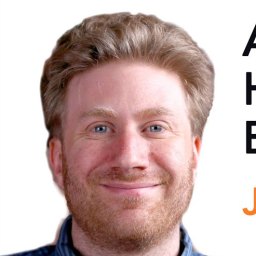
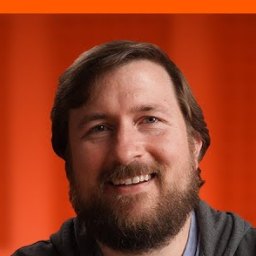
Taggar says successful founders have varied strengths, and school or work performance does not reliably predict startup success. Early customer rejection demands resilience, which can be hard to judge from confidence or interview style. He describes Benchling founders Sajith and Corey, whose company took about two years to begin making revenue and later won major biotech and pharmaceutical customers.
Should You Start A Startup?
Speaker
Harj Taggar, a Y Combinator group partner, explains how to decide whether to start a startup and how to prepare by finding collaborators, testing ideas, and assessing the risks.
Taggar says initial reasons for starting, including curiosity or wanting to make money, can change; lasting interest in the problem and the people may help founders through difficult periods. He recommends estimating the worst case, including a year with little or no salary, and deciding whether you can handle it. Startup experience can also build useful skills and open career paths, even if the company closes.
Taggar recommends treating the search for an idea and a co-founder as connected. Talk with people whose thinking you enjoy, explore technologies and products, and research topics that interest you. He suggests working at a startup to meet potential co-founders and learn how startups operate, then turning promising conversations into small side projects.
Taggar advises non-programmers to learn enough coding to build a first version or find a technical co-founder. Early feedback may be mixed, so look for users who care enough to change how they work; one passionate user can be stronger evidence than a large waitlist. He also suggests noticing whether side projects energize you and whether you enjoy working with your collaborators before deciding to leave a job.
Takeaways
- Judge your fit by how you handle setbacks, not by confidence or credentials alone.
- Before starting, make the likely worst case concrete and decide whether you can live with it.
- Talk through ideas with people you work well with; those conversations can surface both ideas and potential co-founders.
- Build and launch small projects to learn, test user reactions, and see whether the work energizes you.
- A deeply engaged early user can be more informative than a large waitlist.
Mentioned in this talk


Search inside this talk
What was claimed 13
- role atHarj Taggar is group partner at
 Y Combinator
“I'm a partner at Y Combinator”
0:00inChoosing a Startup to Work AtYouTube Verified4 sources· Talk
- metricBenchling: Worth over six billion dollars
“Benchling is now worth over six billion dollars”
YouTube Unverified1 source· Talk
- role at
“Sajith has grown into a formidable founder and CEO”
YouTube Unverified1 source· Talk
- founded
“Sajith, the founder of Benchling”
YouTube Unverified1 source· Talk
- featureBenchling: Software for biotech and pharmaceutical companies
“sell software to biotech and pharmaceutical companies”
YouTube Unverified1 source· Talk
- featureTriplebyte: Software to help companies identify and hire great people
“used software to help companies identify and hire great people”
YouTube Unverified1 source· Talk
- metric
 Rippling: $10 billion company
“a $10 billion company”
YouTube Unverified1 source· Talk
- featureRippling: Hires former founders to lead product divisions as general managers
“around 50 former founders that work at Rippling”
YouTube Unverified1 source· Talk
- metricOutschool: Valued at over $3 billion
“which is now valued at over $3 billion”
YouTube Unverified1 source· Talk
- foundedNick Grandy founded Outschool
“he left to start another YC company, Outschool”
YouTube Unverified1 source· Talk
- previously atNick Grandy previously at
 Airbnbfirst employee
“he went on to join another YC company ... as its first employee”
YouTube Unverified1 source· Talk
- foundedNick Grandy founded Wonderbar
“YC funded his first startup, Wonderbar, in 2008”
YouTube Unverified1 source· Talk
- featurePaul Buchheit: Advises making products a few people love rather than many people are indifferent toward
“better to make a product that a few people really love”
YouTube Unverified1 source· Talk