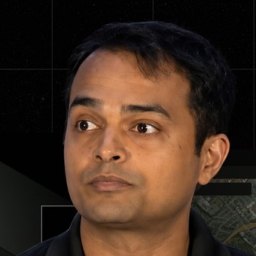
Dolgov says physical AI cannot follow “move fast and break things” because mistakes can cost lives, and cars must make decisions in milliseconds on board. Unlike digital AI, it lacks a ready-made internet-scale source of labeled data and needs strong safety evidence before deployment. He argues teams should define operating conditions and scale through a rigorous deployment framework.
The Demo Is Only 1% Of The Work
Speaker
Waymo Co-CEO Dmitri Dolgov shares lessons from building and scaling the Waymo Driver at Y Combinator’s Startup School, focusing on the engineering and safety demands of physical AI.
Waymo’s early autonomous driving demo took about 18 months, but turning it into a service and scaling it took roughly 15 years. Dolgov says each additional “nine” of reliability or performance takes about ten times more effort, and rare failures become routine at millions of miles per week. Founders should decide how many nines their product needs before choosing an approach or celebrating demo traction.
Dolgov warns that a technology with a fast early improvement curve may plateau before a product reaches its safety target. Waymo combines cameras, lidar, and radar, whose different strengths help detect hazards in darkness, dust, glare, and other difficult conditions. He also advises designing for future hardware improvements rather than locking a company’s plans to today’s component prices.
Dolgov describes Waymo’s approach as combining scalable learned models with useful structure, such as physics and road rules, to support performance and validation. He says closed-loop simulation is essential because an agent must be tested on how its actions change the world; Waymo’s simulator models both behavior and sensor data, including synthetic rare scenarios. The agent, simulator, and critic form a flywheel, while evaluation and metrics guide what the system learns and when it is ready to deploy.
Dolgov calls evaluation and metrics strategic assets and says teams should define “good enough” before building a product. Waymo’s Safety and Readiness Framework assesses the full system, including onboard behavior, physical components, off-board systems, and operations. He cites Waymo’s published data covering over 220 million autonomous miles and reports 17 times fewer crashes causing serious injury than human drivers in its operating areas.
Takeaways
- Set a measurable reliability and safety target before committing to a demo-driven technical path.
- Treat rare failures as core product requirements when deployment scale makes them frequent.
- Pick architectures and hardware with a credible path to the performance your product needs.
- Invest in realistic closed-loop simulation so agents can be evaluated on the consequences of their actions.
- Build evaluation and safety evidence early; they guide development and help earn customer and public trust.
Mentioned in this talk


Search inside this talk
What was claimed 12
- usescore_product
“we use multiple sensing modalities: cameras, lidar, and radar”
YouTube Verified3 sources· Talk, Job posting
- usescore_product
“we use multiple sensing modalities: cameras, lidar, and radar”
YouTube Verified3 sources· Talk, Job posting
- built
 Waymo built Waymo Driver
“what it takes to build and safely ship ... the Waymo Driver”
YouTube Verified4 sources· Talk, Job posting· archived
- role atDmitri Dolgov is Co-CEO atWaymo
“Waymo Co-CEO Dmitri Dolgov”
YouTube Unverified1 source· Talk
- metricWaymo Driver: Around 500,000 trips per week and over 4 million fully autonomous miles per week in 15 U.S. cities
“serving around 500,000 trips per week and driving over 4 million fully autonomous miles every week in 15 cities”
YouTube Unverified1 source· Talk
- uses
“we use multiple sensing modalities: cameras, lidar, and radar”
YouTube Unverified1 source· Talk
- featureWaymo Foundation Model: Multimodal world-action-language model that processes camera, lidar, and radar inputs
“It's a multimodal world-action-language model.”
YouTube Unverified1 source· Talk
- builtWaymo built Waymo Foundation Model
“This philosophy ... produced our latest core technology. At its heart is the Waymo Foundation Model.”
YouTube Unverified1 source· Talk
- uses
“This is the approach we're pursuing at Waymo, which we call structure-augmented end-to-end.”
YouTube Unverified1 source· Talk
- uses
“Our world model leverages the great work of Google DeepMind on Genie 3.”
YouTube Unverified1 source· Talk
- built
“We spent years building and refining it, and it guides our development, deployment, and scaling.”
YouTube Unverified1 source· Talk
- metricWaymo Driver: About 17 times better than human drivers for crashes causing serious injury, based on over 220 million fully autonomous miles
“about 17 times better than human drivers when it comes to crashes that cause serious injury”
YouTube Unverified1 source· Talk