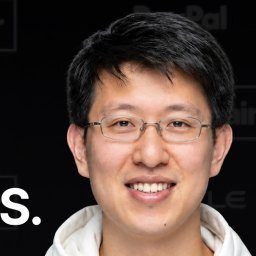
Puneet argues that AI gives Indian founders a chance to build global companies because the technology’s impact crosses borders. He says success depends more on understanding the technology deeply than on having an established network or the right business model. He points to an Indian YC company that cold-emailed US insurance companies and won customers, and recommends YC as a route to building in the US.
India Can Create The Largest AI Companies
Speakers
Puneet, a founder and former YC venture partner, joins Arnav of Peak XV and YC hosts at a startup event in India to discuss building AI companies, developing as a founder, and using AI tools.
Arnav says traditional advice to pursue safe, prestigious careers may become less reliable as AI changes those jobs, while recognizing that taking risks can be harder for young Indians without strong safety nets. John says AI lets young founders learn and build faster, and advises them to tinker with emerging tools to discover unmet needs. The hosts encourage people to build projects with others and get real users, since ideas often emerge through making and iterating.
Ankit says coding agents let small teams compete by building a better product, even when competitors move first. He describes paying for high usage limits and using models to generate extensive tests and documentation, arguing that more compute can improve results and reveal product ideas. The panel also discusses open-source models as a lower-cost option for some tasks and expects model costs to fall.
John says YC applications should clearly explain what a team is building; impressive-sounding complexity can obscure the point. He describes founder taste as making intentional product choices informed by customer conversations, and agency as finding ways to make things happen. He adds that founders’ rate of learning matters, and the hosts underline customer obsession as a recurring trait in the founders’ stories.
Jerry says the fundamentals of founding, including customer focus and tinkering, have changed little, while AI gives builders more leverage and lets them ship faster. The hosts encourage attendees to meet potential collaborators, start projects, and consider working at promising companies. Ankit says attendees will receive credits to start building in the coming days.
Takeaways
- Build for global customers by proving your product works, even without warm introductions.
- Use hands-on projects with real users to discover needs and develop product judgment.
- Try emerging AI tools at meaningful scale, and compare frontier and open-source models for each task.
- Write YC applications in clear language, grounding product choices in customer insight.
- Find ambitious collaborators and build something together soon.
Mentioned in this talk


Search inside this talk
What was claimed 10
- previously atventure partner
“was a venture partner at Nexus”
YouTube Unverified1 source· Talk
- role atPuneet is venture partner at
 Y Combinator
“I joined YC”
YouTube Unverified1 source· Talk
- acquiredSwiggy acquired SuperDaily
“We exited to Swiggy”
YouTube Unverified1 source· Talk
- foundedPuneet founded SuperDaily
“My last startup was SuperDaily”
YouTube Unverified1 source· Talk
- metricSuperDaily: $100 million in annual revenue
“We scaled that company to around $100 million in annual revenue”
YouTube Unverified1 source· Talk
- role at
“I'm with the venture firm Peak XV now”
YouTube Unverified1 source· Talk
- featureEmergent: Building and scaling a global company from India
“Giga and Emergent had never lived in San Francisco before starting their companies”
YouTube Unverified1 source· Talk
- featurecoding agents: Help users build products rapidly
“with coding agents, you can get something off the ground so fast”
YouTube Unverified1 source· Talk