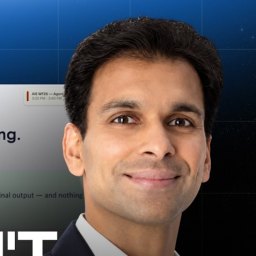
Nat uses AI tools such as Lex, Claude, and GPT mostly to critique nonfiction drafts, flag unclear or redundant passages, and check whether an argument treats opposing views fairly. He says the feedback can be specific, but writers need to judge it themselves: AI sometimes recommends a duller style that strips out personality. For fiction, he finds AI useful for research, brainstorming, and adding environmental detail.
Why You Should Push Yourself to Do Hard Things
Speakers
Nat Eliason, author, talks with Peter Yang about using AI in writing, building confidence through hard work, and creating lasting work without getting trapped by algorithms.
While drafting his sci-fi novel Husk, Nat initially worked without AI, then used it to help manage a story with multiple viewpoints, many characters, and subplots. For a disease storyline, he used ChatGPT to brainstorm plausible diagnoses, and he used AI to explore names and character backgrounds. He also describes using NovelCrafter with a long prompt containing a writing sample and details about the characters, plot, and setting.
Nat says confidence in learning comes from repeated proof that you can figure things out. He suggests starting with a manageable task, such as fixing a washing machine, before taking on more difficult challenges. While writing Crypto Confidential, he tracked daily word counts in a spreadsheet; later, he built an app to log writing sessions and saw that he had written 110,000 words that year.
Nat warns that creators can become dependent on algorithms and audience demand, repeating topics to keep views and income flowing. He argues that short-term engagement can distract from work with lasting value, such as books, and says creators should have a next step in mind when building an audience. For people who want to write books, he recommends starting a newsletter and considering a book deal once it reaches roughly 5,000 to 10,000 subscribers.
Takeaways
- Use AI to find gaps and test arguments, then decide which suggestions fit your voice.
- Break long-term work into visible inputs, such as daily word counts or logged work sessions.
- Start learning with a small task you can complete to build evidence that you can teach yourself.
- Build an audience around a durable body of work and decide what you want that audience to help you do next.
Mentioned in this talk


Search inside this talk
What was claimed 12
- usesNat Eliason uses
 Claude
“I generally like Claude a little bit more for writing, but I really like it as a feedback tool”
YouTube Verified2 sources· Talk
- usesNat Eliason uses Lex
“I use Lex”
YouTube Unverified1 source· Talk
- featureLex: AI editing tools for finding unclear sections and ideas to expand
“it has some really great editing tools built into it”
YouTube Unverified1 source· Talk
- usesNat Eliason uses
 GPT-4oto critique drafts
“I fed the whole post into GPT and said, 'Hey, what part of this could be improved?'”
YouTube Unverified1 source· Talk
- usesNat Eliason uses
 ChatGPT
“I fed those symptoms into ChatGPT”
YouTube Verified2 sources· Talk
- usesNat Eliason uses
 Novelcrafterfor fiction writing and book organization
“there’s a tool I use called NovelCrafter”
YouTube Unverified1 source· Talk
- integrates withNovelcrafter integrates with
 OpenRouter
“you plug in OpenRouter and choose Claude Opus or Sonnet, GPT-4o or GPT-3”
YouTube Unverified1 source· Talk
- featureNovelcrafter: Supports customizable prompts and chats that can read a whole book for feedback
“the full prompt it’s getting fed is about 6,000 words long”
YouTube Unverified1 source· Talk
- usesNat Eliason uses
 Stravato log runs, walks, and exercise
“I like being able to log my runs, walks, and exercise on Strava”
YouTube Unverified1 source· Talk
- metricProlific: Nat had logged 110,000 words that year
“This year, Nat’s logged 110,000 words”
YouTube Unverified1 source· Talk
- featureProlific: Logs writing sessions, time, word counts, and projects
“after a writing session, I can log it there”
YouTube Unverified1 source· Talk
- builtNat Eliason built Prolific
“started hacking away, and built and launched the app”
YouTube Unverified1 source· Talk