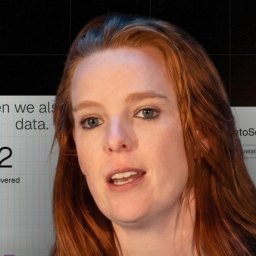
Greene says she and her husband, a Stanford professor, started VMware with two graduate students to bring his research to market. During the dot-com boom, investors and business hires favored high-profile internet companies, while VMware's virtualization software was harder to explain. She and her husband funded an initial friends-and-family round, then brought in Andy Bechtolsheim, David Cheriton, and John Hennessy, who understood the technology quickly.
VMware Cofounder Diane Greene with Jessica Livingston at the Female Founders Conference
Speakers
VMware cofounder Diane Greene talks with Y Combinator's Jessica Livingston at the Female Founders Conference about building VMware, starting Bebop, joining Google Cloud, and choosing a useful board.
Greene initially told her husband she could help start the company but could not run a startup while expecting their second child. The team pressed ahead, and she brought her baby to the office after giving birth six months in. Later, she traveled with her daughter as VMware grew and Greene began meeting customers and partners around the world.
Greene says she regretted feeling selfish for resisting a sale, though she was glad she later left VMware and spent time with her children. In 2012, she started Bebop to make enterprise applications simpler, especially for systems with many users and access controls. She wanted software to anticipate what users were trying to do and reduce the layers of screens and clicks.
Greene connected Bebop's work with Google's infrastructure, AI, machine learning, Maps, and knowledge graph capabilities. After discussing the move with Bebop's team, she sold the company to Google and said the decision worked out well. She describes cloud infrastructure as a major enterprise shift, with a small number of providers able to invest billions in scale, security, and ongoing monitoring.
Greene advises founders to build a board they can trust for candid discussion, rather than one they must manage or impress. At VMware, her board updates included a few metrics and a document about problems she was working through. She recruited Larry Sonsini because his experience structuring deals could help VMware work with Intel, Microsoft, hardware vendors, and large companies.
Takeaways
- Explain a deep technical product to investors who understand the problem it solves.
- Choose board members for specific expertise the company needs.
- Use board meetings to discuss real uncertainties, not only polished results.
- When simplifying enterprise software, reduce steps and anticipate user needs.
- Consider how a partner's technology and scale could strengthen a product.
Mentioned in this talk


Search inside this talk
What was claimed 24
- role atDiane Greene is chief of Google's Cloud businesses at
 Google
“She's the chief of Google's Cloud businesses.”
0:00inDiane Greene's Advice for FoundersYouTube Verified2 sources· Talk
- foundedDiane Greene founded
 VMware
“I co-founded VMware with my husband”
YouTube Verified4 sources· Talk, Web· archived
- previously atDiane Greene previously at VXtremeadviser
“I was an adviser to that one”
YouTube Unverified1 source· Talk
- acquired$380 million
“We sold it to Google in 2015 for $380 million”
2:31inDiane Greene's Advice for FoundersYouTube Verified2 sources· Talk
- foundedDiane Greene founded Bebop
“Bebop, which we founded in 2013.”
2:31inDiane Greene's Advice for FoundersYouTube Verified2 sources· Talk
- invested inDiane Greene invested inVMwareheld back her contribution to keep the seed round fair to the other founders
“I held back on how much I put in, to be fair to all the founders.”
YouTube Unverified1 source· Talk
- invested inJohn Hennessy invested inVMware
“including John Hennessy”
YouTube Verified2 sources· Talk
- invested inAndy Bechtolsheim invested inVMware
“We got Andy Bechtolsheim and a few other people”
YouTube Verified2 sources· Talk