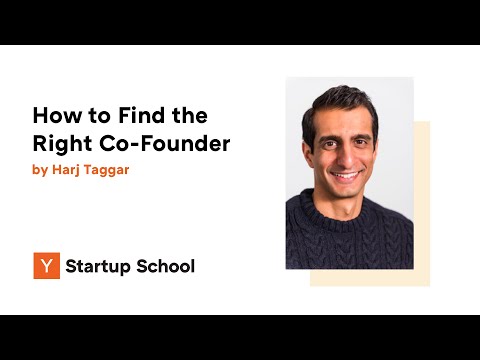
Seibel says many MBA applicants miss basic startup practices, especially around having a technical co-founder, committing to the company, and showing progress with a product. He says applicants often rely on research instead of testing ideas with a live product. Bussgang agrees the lessons apply broadly, while noting MBA students may be especially prone to over-researching.
How Should Business Schools Prepare Students for Startups?
Speakers
Jeff Bussgang, an HBS lecturer and Flybridge Capital Partners GP, and YC CEO Michael Seibel discuss how business schools can better prepare students to start tech companies on Y Combinator’s podcast.
Bussgang points to business school silos, limited technical skills among students, and too few current startup practitioners as root causes. He cites HBS’s new Coders club and suggests admitting more students with engineering or coding backgrounds. Seibel says schools can help students learn prototyping and technical architecture, and describes efforts to bring business and engineering students together.
For students outside major startup hubs, Bussgang says building a technical network takes extra effort, but local engineering programs and online tools can help. Seibel argues that founders without access to people who can build software often stay in research or try to outsource core technical work. He says some startup foundations cannot be replaced by hustle.
Seibel notes that universities prioritize learning, which can make their entrepreneurship programs more forgiving than investors are. He and Bussgang weigh the cost and long-term network of an MBA against the practical experience of working at an early-stage startup. Seibel favors the startup job for many nontechnical people outside top business schools, especially if they are not already on an unusually strong career path.
Bussgang recommends studying startup writing and books by Paul Graham, Brad Feld, Fred Wilson, Eric Ries, and Steve Blank when school advice is weak. He adds that venture investors look for large markets and transformative opportunities, not merely polished small businesses. Blue Apron is his example of a disruptive business model developed by Harvard MBA Matt Salzberg.
Takeaways
- Test demand with a working product; research alone is weak evidence.
- For a tech startup, recruit a committed technical co-founder instead of outsourcing the core product.
- Build relationships with engineers through classes, local programs, and startup communities.
- Compare an MBA’s cost and network with the learning and mentors available at an early-stage company.
- Study proven startup material and pursue ideas with room to transform a large market.
Mentioned in this talk


Search inside this talk
What was claimed 6
- role atMichael Seibel is worked at YC at
 Y Combinator
“I help run the accelerator.”
0:00inHow to Plan an MVPYouTube Verified17 sources· Talk
- role atJeff Bussgang is general partner at Flybridge Capital Partners
“GP at Flybridge Capital Partners”
YouTube Unverified1 source· Talk
- role atJeff Bussgang is lecturer at
 Harvard University
“a lecturer at HBS”
YouTube Unverified1 source· Talk
- featureHarvard University: HBS Coders club started in 2017
“This year, for the first time, HBS started a club called HBS Coders.”
YouTube Unverified1 source· Talk
- feature
 MIT Media Lab: Business school students take classes there to mingle with engineers and other technical people
“business school students take classes at the MIT Media Lab”
YouTube Unverified1 source· Talk
- foundedMatt Salzberg founded Blue Apron
“Matt Salzberg discovered and built that company”
YouTube Unverified1 source· Talk