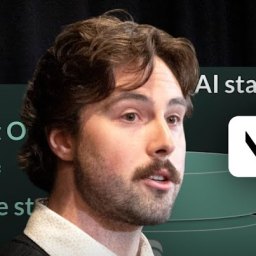
Varun says the company began as Exafunction, helping customers run GPU workloads, and had reached a couple million dollars in revenue. In 2022, the team concluded that transformer models could make its infrastructure business easier to commoditize, so it pivoted to coding tools over a weekend. Eight people began building Codeium, which shipped within two months.
Betting On AI Agents, Pivoting In 48 Hours, And The Future of Coding
Speaker
Varun Mohan, co-founder and CEO of Windsurf, joins Y Combinator’s The Light Cone to discuss the company’s pivots, AI coding agents, and how software development may change.
After growing its enterprise business, the team shifted toward agents as models improved, then built the Windsurf IDE because it felt VS Code limited the experience they wanted. Fewer than 25 engineers shipped it in under three months. Varun also describes supporting multiple IDEs and large company codebases as important for serving customers such as Dell and JPMorgan Chase.
Varun says Windsurf bet early on agents that could understand a codebase and make changes, rather than relying mainly on chat and autocomplete. For code retrieval, the team combines keyword search, vector search, syntax parsing, and GPU ranking to find relevant context. Its evaluations use code changes and tests to measure retrieval, intent understanding, and whether the resulting code passes.
Varun says developers at Windsurf increasingly give agents tasks before editing code themselves, including repetitive work and deployment workflows. He recommends committing frequently so agent changes can be reverted safely. He expects AI to reduce boilerplate and give engineers more time to test product ideas, while broadening software creation to include nontechnical builders.
Varun describes Windsurf’s opportunity as improving on what foundation models can do, while recognizing that the baseline keeps moving. He points to code migrations and automated bug and alert resolution as areas where specialized products could deliver value. His advice to founders is to change their minds quickly when evidence undermines their ideas.
Takeaways
- Treat a startup thesis as something to test against changing evidence, and pivot quickly when it stops holding up.
- Choose a pivot that the team is motivated to pursue, then commit to it together.
- Use evaluations tied to real outcomes, such as whether code changes pass tests, to guide product complexity.
- For agent-assisted coding, commit frequently so you can recover from broad or incorrect changes.
- Look for repetitive engineering work where a specialized tool can deliver measurable value.
Mentioned in this talk


Search inside this talk
What was claimed 25
- foundedVarun Mohan founded
 WindsurfCo-founder and CEO
“the co-founder and CEO of Windsurf”
YouTube Verified3 sources· Talk, Web· archived
- ceo ofVarun Mohan CEO ofWindsurfCEO
“the co-founder and CEO of Windsurf”
YouTube Unverified1 source· Talk
- metricCodeium: Well over a million developers had used the product and it had hundreds of thousands of daily active users.
“well over a million developers use it, and it has hundreds of thousands of daily active users”
YouTube Unverified1 source· Talk
- previously atVarun Mohan previously at
 ExafunctionCo-founder
“We didn't start as Windsurf; we started as a company called Exafunction.”
YouTube Unverified1 source· Talk
- uses
“we were early adopters of GitHub Copilot”
YouTube Unverified1 source· Talk
- built
“everyone started working on Codeium, the extension product, immediately after”
YouTube Unverified1 source· Talk
- feature
Microsoft Copilot: AI coding assistant used by the founders as an early signal for coding tools.
“we were early adopters of a product called GitHub Copilot”
YouTube Unverified1 source· Talk
- metricCodeium: The earliest version was materially worse than GitHub Copilot; its main advantage was being free.
“The only difference was that it was free.”
YouTube Unverified1 source· Talk