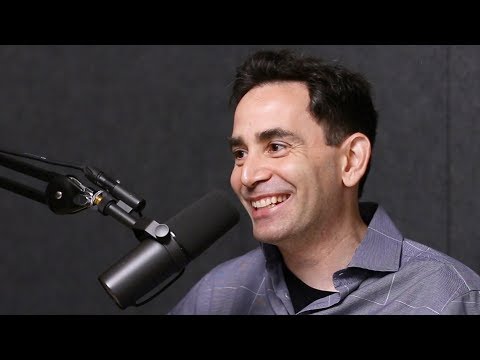
Bernstam found YC through Paul Graham’s essays while studying theoretical physics and joined the 2006 batch. Scribd evolved from a college classifieds idea into a way to embed documents in web pages, after the founders saw how hard it was to open files. He credits YC’s small-batch community and partner feedback with helping the company survive, while the founders kept costs low and lived on savings.
The Challenges a Repeat Founder Faces
Speaker
Tikhon Bernstam, co-founder of Scribd and Parse and an angel investor, talks about founding companies, finding product-market fit, and what repeat founders can learn, in a Y Combinator interview.
After five and a half years at Scribd, Bernstam left to explore B2B and enterprise products with former colleague James. They tested 12 ideas with simple landing pages, measured sign-ups, and asked users why they were interested. User conversations helped the team settle on Parse, a backend service that let mobile developers focus on native apps instead of server infrastructure.
Bernstam returned to YC for its community, feedback, and early users, then raised $1.5 million at Demo Day and $5.5 million in a Series A. The team focused on making a small group of developers deeply value Parse before adding pricing or pushing growth. They recruited through users, referrals from strong hires, and a Hacker News jobs post; Facebook acquired Parse in 2013 and later open-sourced it.
As an angel investor, Bernstam looks for large markets and determined founders, and says he is open to solo founders who show perseverance. He argues that strong teams in growing markets can find the right product, citing Twitch’s shift from Justin.tv and Dropbox’s improved cloud backup experience. He recommends looking for fast-growing industries, customer frustrations, and products that could be substantially better.
Bernstam says repeat founders can feel pressure to pursue a grand idea, when many successful companies simply improve on existing products. He advises testing small ideas and delaying fundraising until there is strong product-market fit, since early capital can make it harder to pivot. His closing advice is to find a large, growing market where you have deep knowledge and build a much better product.
Takeaways
- Use simple landing pages and user conversations to test demand before building a full product.
- Look for a small group of users who would be seriously disappointed to lose your product.
- Keep spending low while you search for product-market fit, and avoid raising money before you understand the business.
- Explore growing markets you know well, including established ones where current products frustrate customers.
- As a repeat founder, allow yourself to test modest ideas instead of waiting for a breakthrough.
Mentioned in this talk




Search inside this talk
What was claimed 12
- acquired
 General Motors acquired
 Cruise
“Cruise ... was acquired by GM for $1 billion”
17:27inAdvice for Hard-tech and Biotech FoundersYouTube Verified3 sources· Talk, Web· archived
- foundedTikhon Bernstam founded Scribd
“me, Trip, and Jared probably worked on Scribd for at least a year and a half”
YouTube Unverified1 source· Talk
- previously atTikhon Bernstam previously at Scribd
“I left about five and a half years later”
YouTube Unverified1 source· Talk
- foundedTikhon Bernstam founded Parse
“James and I ... were coding and working on the prototype”
YouTube Unverified1 source· Talk
- metricParse: Roughly 10 times faster to make mobile applications
“We used to say roughly 10 times faster”
YouTube Unverified1 source· Talk
- featureParse: Handled backend and server-side work for mobile apps so developers could focus on native client code
“Parse took care of that whole second part of the stack”
YouTube Unverified1 source· Talk
- metricParse: Raised $1.5 million in seed funding and $5.5 million in Series A funding; $7 million total
“we only took $1.5 million ... raised $5.5 million from Ignition”
YouTube Unverified1 source· Talk
- acquired
“Facebook acquired the company in 2013”
YouTube Unverified1 source· Talk