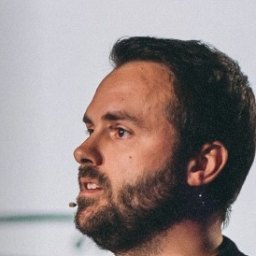
Kitze traces his search for a workable productivity system from childhood lists to Android text files and voice capture through Google Home. He built Benji to bring many productivity features together, but says logging everything became tedious and the app’s input forms remained clunky.
The End of Apps
Speaker
Kitze, a tinkerer and creator of the productivity app Benji, discusses the past, present, and future of productivity and personal agents at Agent Conf 2026, hosted by Callstack.
After ChatGPT’s plugin announcement, Kitze imagined replacing app forms with conversational interfaces. Later, experiments with Claude Code and OpenClaw agents included email triage, smart home control, booking a snow shoveler, and collecting personal data in Markdown. The experiments felt powerful, but maintaining OpenClaw became a full-time job and many people in his community found agents unreliable and difficult to set up.
Kitze argues that one-to-one agent chats do not fit people juggling many tasks, and that a general-purpose agent lacks clear specialization. He favors named agents with their own models, instructions, tools, permissions, and skills. He also found chat platforms confusing for managing work, while the choice between self-hosted and cloud agents leaves tradeoffs around setup and data privacy.
Kitze describes Mind, a browser organized around to-dos, and Defold, an interface combining to-dos, notes, and chats. He sees agents creating interactive widgets and temporary apps for tasks such as choosing flights or packing for a trip. He says Exeutor connects MCPs across agent setups, while Skillbox makes skills portable.
Kitze predicts computers will handle most task work in the background and prompt people when they need to make a decision or unblock a task. He expects many consumer apps to give way to conversational computer interfaces, while specialist creative software remains. He speculates Apple could benefit if local models on its hardware become capable enough for everyday productivity.
Takeaways
- Reduce friction at the point of capture: Kitze’s voice-to-task workflow worked until Google discontinued the feature it depended on.
- A broad productivity app can become burdensome when users must manually log every activity; Kitze built up 49 features but struggled to market the product.
- Treat agent reliability and setup effort as product problems: Kitze’s OpenClaw community shifted from sharing use cases to troubleshooting failures.
- Design agents around distinct tasks, permissions, tools, and skills instead of forcing many workflows into one chat.
- Portable connections and skills can help users carry an agent setup between tools, while keeping personal data organized can make it more useful.
Mentioned in this talk


Search inside this talk
What was claimed 14
- foundedKitze founded Tinkerer.club
“We formed Tinkerer.club around the time of OpenClaw, around January.”
YouTube Unverified1 source· Talk
- uses
“I could just yell at my Google Home, it would go to IFTTT.”
YouTube Unverified1 source· Talk
- integrates with
“The 'blah blah blah' part would be posted to Todoist.”
YouTube Unverified1 source· Talk
- founded
“In 2022, I started Benji.”
YouTube Unverified1 source· Talk
- usesKitze uses
 Claude Code
“In 2025, like many people, I started using Claude Code.”
YouTube Unverified1 source· Talk
- uses
“I got obsessed with this because it was the first thing in the last few years of LLMs that gave me hope.”
YouTube Unverified1 source· Talk
- uses
“I never bothered to set up ad blocking for my entire family, so now I just ask my bot to set up Pi-hole.”
YouTube Unverified1 source· Talk
- uses
“I switched to Android like a full hipster.”
YouTube Unverified1 source· Talk


