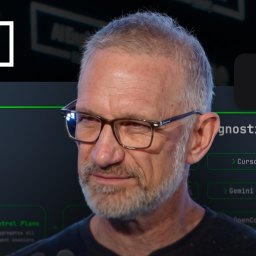
Jay says OpenCode ended June with about 13 million monthly active users, up roughly 20 times since the start of the year, and was processing around 7 trillion tokens a day. He describes Anthropic’s efforts to restrict use of Claude Code subscriptions through OpenCode as an unexpected source of attention: users noticed OpenCode and began looking into it.
He Built the World's #1 Open-Source Coding Agent
Speaker
Jay V, founder and CEO of OpenCode, talks with Y Combinator’s The LLM hosts about OpenCode’s growth, product choices, business model, and long road to success.
Jay says OpenCode aims to help more people experience coding agents, including users priced out of frontier model subscriptions. Open-source models became capable enough for real work, and OpenCode’s data showed Gemini usage overtaking Anthropic models for a four-week period in February. Its $10 OpenCode Go plan offers access to open-source models; Jay cites China as 17% of its users, with Indonesia and Brazil also significant markets.
Jay says companies value OpenCode as a flexible option that avoids locking them into one model or harness. Teams often approach the company after employees have already adopted the product, sometimes asking for security reviews or ways to manage token spending. OpenCode offers a free tier to help people try coding agents, then earns revenue from subscriptions and per-token inference, where volume discounts contribute to margins.
Jay says the OpenCode name reflected a deliberate strategy to become an open alternative in a market with dominant players. The team built a terminal interface for developers and created models.dev to catalog models and providers; the product supported more than 70 models and providers at launch. OpenCode’s server can also run separately from its interface, which let Ramp power a Slack bot with its agent loop.
Jay traces the company’s history to his university years and says the founders incorporated in 2010, applied to Y Combinator repeatedly, and joined in 2021 with a serverless platform. Earlier work in open source, consumer products, marketing, and product design informed OpenCode. He describes the journey as ten years of learning before reaching about $30 million in annualized revenue in eight months.
Takeaways
- Make a product easy to try before asking users to commit to a larger spend.
- Support multiple models when users value choice and model capabilities are changing quickly.
- A free tier can introduce a product, while subscriptions and usage revenue can support deeper use.
- For enterprise products, employee adoption can precede formal procurement and security reviews.
- Earlier products can build skills in product, positioning, and marketing that become useful later.
Mentioned in this talk





Search inside this talk
What was claimed 20
- metric
 OpenCode: 4.6 million weekly active users
“They're now at 4.6 million weekly active users”
YouTube Unverified1 source· Talk
- featureOpenCode: Open-source coding agent that works with any model
“an open-source alternative to Claude Code that works with any model you want”
YouTube Unverified1 source· Talk
- ceo ofCEO
“founder and CEO of OpenCode”
YouTube Unverified1 source· Talk
- founded
“founder and CEO of OpenCode”
YouTube Unverified1 source· Talk
- metricOpenCode: Around 7 trillion tokens processed per day
“processing around 7 trillion tokens per day”
YouTube Unverified1 source· Talk
- metricOpenCode: Around 13 million monthly active users at the end of June
“ended June with around 13 million or so”
YouTube Unverified1 source· Talk
- metricOpenCode: About $40 million annualized inference revenue based on last week's data
“last week's data and extrapolated for the year, that's around $38 to almost $40 million”
YouTube Unverified1 source· Talk
- metricOpenCode: Around 160,000 monthly subscribers, accounting for about $18 million annualized revenue
“grown to around 160,000 monthly subscribers. That accounts for about $18 million in annualized revenue”
YouTube Unverified1 source· Talk