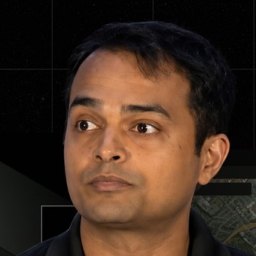
When Li began working on computer vision, data was scarce and standard algorithms struggled to generalize. She and her student gathered images from the internet, built a visual taxonomy, and released ImageNet openly so researchers could train and compare their systems. In 2012, a convolutional neural network called SuperVision sharply improved challenge results, bringing together data, GPUs, and neural networks.
Fei-Fei Li: Spatial Intelligence is the Next Frontier in AI
Speaker
At a Y Combinator event, Fei-Fei Li, founder and CEO of World Labs, discusses spatial intelligence, her work on ImageNet, and building AI that understands 3D worlds.
ImageNet focused on identifying objects, but Li wanted computers to describe whole scenes, such as a conference room and what is happening in it. Around 2015, her lab published early work on image captioning with Andrej Karpathy and others. She connects that progress to today’s generative models, which can create images from text.
Li says AI needs models that capture 3D structure and can understand, generate, and reason about the world. Vision is difficult because cameras project a 3D world onto 2D images, spatial data is less accessible than text, and models must work across both generated and real environments. She sees potential applications in design, games, robotics, and eventually the metaverse.
Li describes starting a dry-cleaning business at 19 to support her family and attend Princeton, then taking on new challenges in academia, at Google, and at Stanford’s Human-Centered AI Institute. She says she enjoys building from the ground up and looks for intellectual fearlessness in students and hires. Her advice to people pursuing research is to follow intense curiosity while choosing problems that academia can meaningfully address.
Li says a healthy AI ecosystem can include both open and closed approaches, depending on a company’s business strategy, and argues that open-source efforts should be protected. On world-model data, she says World Labs is taking a hybrid approach that values both quantity and quality. For academic researchers, she points to interdisciplinary AI, scientific discovery, theory, explainability, causality, and small-data problems as areas to explore.
Takeaways
- Build shared datasets and benchmarks when a field lacks the data needed to compare progress.
- Choose research problems where your team has an advantage, such as hard foundational questions or interdisciplinary work.
- Treat spatial AI as a combination of 3D understanding, generation, and interaction with real environments.
- For data-intensive models, quality matters alongside scale.
- Look for intellectual fearlessness when hiring people to tackle unfamiliar problems.
Mentioned in this talk


Search inside this talk
What was claimed 13
- foundedFei-Fei Li founded
 World LabsCo-founder and CEO
“I founded a company with three incredible young, world-class technologists”
YouTube Verified3 sources· Talk, Web· archived
- foundedFei-Fei Li founded
 ImageNet
“One of the first projects you created was ImageNet in 2009”
YouTube Unverified1 source· Talk
- metricImageNet: Over 80,000 citations
“It has over 80,000 citations”
YouTube Unverified1 source· Talk
- launchedFei-Fei Li launched ImageNet Challenge
“The other thing we did was create a challenge”
YouTube Unverified1 source· Talk
- featureImageNet Challenge: Annual open competition using a released test dataset
“Every year, we released a test data set”
YouTube Unverified1 source· Talk
- uses
“We got a result that really stands out”
YouTube Unverified1 source· Talk
- ceo ofFei-Fei Li CEO ofWorld LabsCEO
“become the founder and CEO of World Labs”
YouTube Unverified1 source· Talk
- usesWorld Labs uses World models
“creating world models that go beyond flat pixels and language”
YouTube Unverified1 source· Talk
- featurespatial intelligence: Understanding, generating, and reasoning about the 3D world, and doing things in it
“understanding, generating, and reasoning about the 3D world”
YouTube Unverified1 source· Talk
- feature
 Pulsar: Differentiable rendering
“does a lot of differentiable rendering”
YouTube Unverified1 source· Talk
- builtChristoph Lassner builtPulsar
“Chris created Pulsar”
YouTube Unverified1 source· Talk
- founded
“I went back to Stanford and created the Human-Centered AI Institute”
YouTube Unverified1 source· Talk
- role atFei-Fei Li is employee at
 Google
“Then I went to Google to learn a lot about business”
YouTube Unverified1 source· Talk