Zaremba describes OpenAI’s aim as developing AI for humanity’s benefit and mentions work in robotics and game learning. He breaks robotics into locomotion, navigation, and manipulation, describing manipulation as the hardest because robots cannot reliably grasp arbitrary objects. A factory robot can be programmed for a specific item, but that solution may not generalize.
An AI Primer
#Model Training#Model Architectures#Robotics#Reinforcement Learning#Computer Vision#Speech Technology#Workflow Automation
Speaker
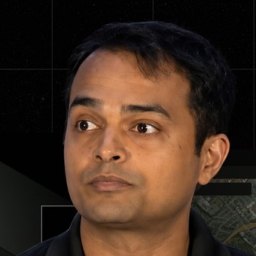
Wojciech Zaremba, an OpenAI founder working on robotics, explains AI and machine learning at a Y Combinator talk.
Zaremba says learning across many games could help AI transfer knowledge, as people do when they quickly pick up a new sport. He notes that Atari systems can require about three years of real-time play to learn simple games, though parallel computing can shorten training to days. In robotics, rewards are harder to define: for a robot scrambling eggs, measuring whether the result is good is difficult, and the environment cannot simply be reset.
Zaremba defines AI broadly as software that solves problems through intelligent behavior, including rule-based systems such as early Google Search using PageRank. Machine learning builds programs from data, with supervised learning mapping examples such as emails to labels such as spam or not spam. Deep learning uses multiple computation steps, and neural networks implement these through layers of matrix operations and nonlinear functions such as ReLU.
Zaremba says neural networks became useful because researchers could train them effectively, aided by stochastic gradient descent, more computing power, and techniques such as convolutional networks. Convolutions apply the same local computation across an image, and related methods can process speech represented by time and frequency. He points to ImageNet, with one million images across 1,000 classes, where reported error rates fell from about 25% to roughly 3% over several years; similar neural network approaches also advanced speech recognition and translation.
Zaremba distinguishes narrow AI, built for a specific problem, from general AI, which could handle many problems, and superintelligence, which exceeds human intelligence. He says supervised learning is the machine learning approach most ready for business, when enough input and output examples are available, while robotics remains difficult because tasks like grasping are hard to specify and train. He recommends Coursera, TensorFlow tutorials, and Andrej Karpathy’s Stanford class for learners, and argues that automation may require basic income.
Takeaways
- Use supervised learning when you can collect clear examples of inputs and desired outputs.
- For robotics, plan for reward design and safe resets as core engineering problems.
- Build transfer across tasks into AI systems instead of relying only on training for one game or setting.
- Convolutional networks exploit image structure by reusing local computations across locations.
- Automation planning should consider how workers will find income and purpose as jobs change.
Mentioned in this talk
 OpenAIFacebook Research
 Google Brain
 Coursera
 ImageNetSuperintelligence
 Agent General Interfacerobotics simulation
 machine learning
 AIdeep learningneural networksReLUConvolutional neural networkcomputer visionnarrow AI
 TensorFlowReinforcement learningsupervised learningstochastic gradient descent
 Elon Musk
 Sam AltmanIlya Sutskever
Search inside this talk
What was claimed 6
- previously atWojciech Zaremba previously atGoogle BrainIntern/researcher during PhD (about one year)
“I spent a year at Google Brain”
YouTube Verified2 sources· Talk, Web· archived
- previously atWojciech Zaremba previously at Facebook Research
“and a year at Facebook Research.”
YouTube Unverified1 source· Talk
- role atWojciech Zaremba is founder atOpenAI
“I'm a founder at OpenAI.”
YouTube Unverified1 source· Talk
- featureOpenAI: Focuses on building AI for the good of humanity
“OpenAI focuses on building AI for the good of humanity.”
YouTube Unverified1 source· Talk
- metricImageNet: One million images and 1,000 classes
“It consists of one million images and 1,000 classes.”
YouTube Unverified1 source· Talk
- featureTensorFlow: Framework to train neural networks
“TensorFlow is an example of a framework to train neural networks.”
YouTube Unverified1 source· Talk