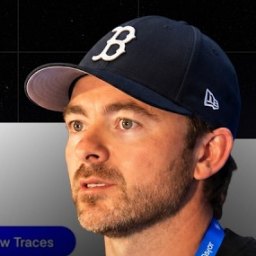
Evans points to data quality and workflow as core constraints: useful analytics depends on reliable instrumentation, and actions such as launching experiments need to fit existing tools and processes. He says larger SaaS companies may also hesitate to launch early versions of AI products because expectations are high.
AI Agents vs Data Analysts: The Truth from Amplitude PM
#Product Analytics#Human-in-the-Loop Systems#Experimentation#Evals#Data Quality#Product-Market Fit#AI Application Development
Speaker
James Evans, head of AI at Amplitude, talks with Peter Yang about building AI agents for product analytics, their human approval workflow, and what they mean for analysts and PMs.
Evans frames the main analytics bottleneck as time. Many teams lack people who can spend hours exploring data, checking replays, and applying best practices. He describes Amplitude agents as AI users of the product that can carry out this work in the background.
Amplitude uses goal-specific agent templates, such as improving web conversion, rather than one agent responsible for every metric. In the demo, an agent finds dead clicks on the pricing page, uses session replay clips to support the finding, and proposes an A/B test to make plan headers clickable. A person reviews and approves the proposed action.
Evans says recommendations need to connect clearly to both the evidence and the template’s best practices so users can assess them. Amplitude looks at whether customers consider experiments reasonable enough to approve, while exploring ways to ask later whether an insight created value. He notes that judging insight quality remains difficult.
Evans expects agents to help teams run experiments they currently lack time for, rather than replace analysts or PMs outright. He calls the approach an Iron Man suit: agents can handle repetitive work while people retain feedback and decision-making roles. For AI product builders, he recommends prototyping coherent products, testing them with users, and adapting as models improve.
Takeaways
- Treat time and limited analyst capacity as product analytics problems agents can address.
- Start with a narrow, team-owned goal so agents are easier to evaluate and improve.
- Show the evidence behind recommendations and keep human approval in the action loop.
- Evaluate whether proposed experiments are useful enough to approve, and seek feedback on insight value over time.
- Prototype a coherent AI workflow with current models, then iterate as users and models provide new evidence.
Mentioned in this talk


Search inside this talk
What was claimed 7
- role atJames Evans is Head of AI at
 Amplitude
“James is the head of AI for Amplitude.”
YouTube Unverified1 source· Talk
- featureAmplitude: Goal-specific agents use Amplitude tools to find insights and propose actions such as experiments.Goal-specific agents use Amplitude tools to find insights and propose actions such as experiments.
“AI specialists using Amplitude to achieve a specific goal.”
YouTube Unverified1 source· Talk
- featureAmplitude AI agents: Agents produce replay data and highlight reels related to an insight so people can check their work.Agents produce replay data and highlight reels related to an insight so people can check their work.
“produces session replay data and a highlight reel of clips that relate to the insight it found”
YouTube Unverified1 source· Talk
- uses
“Basically, it wants to run an A/B test.”
YouTube Unverified1 source· Talk
- featureAmplitude AI agents: Persistent agents monitor pages and can surface proposed experiments for approval.
“The agents are persistent.”
YouTube Unverified1 source· Talk
- metricAmplitude AI agents: Customer approval clicks are an early success metric for proposed experiments.
“we’re prioritizing the success metric of whether people click yes”
YouTube Unverified1 source· Talk
- featureAmplitude: The agent product focuses on insight-to-experiment and uses human review rather than autonomous execution.
“We’re definitely taking the Iron Man suit framework: this makes our customers way better at their jobs.”
YouTube Unverified1 source· Talk