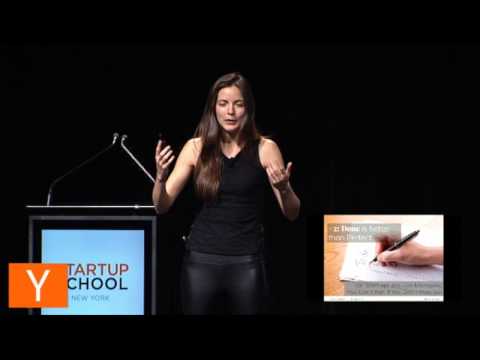
Siroker describes trying to turn his college research in sentiment analysis into a stock market startup, Sentiment Solutions. Working alone, he went without a paying customer, then joined Google to learn how to build products. At Google, he saw how early users and their feedback could help a product improve.
Dan Siroker at Startup School 2013
#Customer Feedback#Experimentation#Product Management#Growth & Distribution#Hiring & Talent#Fundraising
Speaker
Dan Siroker, co-founder of Optimizely, explains how feedback and continuous improvement shaped his startups at Y Combinator’s Startup School 2013.
Inspired by Barack Obama’s call for evidence-based government, Siroker joined the 2008 campaign and ran A/B tests on its digital work. He found the tests valuable but slowed by the need for developer help, which became the original inspiration for Optimizely. Before that, he and Pete Koomen tried CarrotSticks, an online math game, and Spread.ly, a service offering discounts for social sharing; both taught them about customer feedback and distribution.
Siroker and Koomen began exploring Optimizely after recognizing that Spread.ly’s model did not work. A former campaign colleague offered to pay about $1,000 a month for an A/B testing tool, before they had written any code. They built a prototype, followed Paul Graham’s advice to pursue the idea, and grew Optimizely to a $100,000 annual run rate in its first year, then $1.2 million the next.
As Optimizely expanded, Siroker applied feedback loops to hiring, using a higher bar for candidates and refining the hiring process. The company reached 42 people and a $7.6 million annual run rate, and later grew to 130 employees with its product available in 10 languages. For its Series A, the founders held mock board meetings with potential investors and chose Peter Fenton of Benchmark for the questions and feedback he brought.
Siroker sums up his approach as getting feedback from what you do and using it to improve. He says founders can fall into an activity trap by focusing only on running existing processes. Instead, they should define how their company works, as Tesla did with direct car sales, and keep refining that approach.
Takeaways
- Get a paying customer early; their feedback can reveal what to build.
- Build for a problem you understand well enough to prioritize.
- Test whether a business model works before investing heavily in it.
- Use feedback loops in hiring and management as well as product development.
- Define processes that fit your company, then improve them with evidence.
Mentioned in this talk


Search inside this talk
What was claimed 18
- foundedPete Koomen founded Optimizely
“He created Optimizely”
0:39inInside YC's AI PlaybookYouTube Verified2 sources· Talk
- foundedDan Siroker founded Optimizely
“Dan also co-founded Optimizely.”
0:53inBuilding the World’s Most Wearable AIYouTube Verified3 sources· Talk
- previously atDan Siroker previously at
 Google
“I decided to stop working on Sentiment Solutions and go to Google.”
YouTube Unverified1 source· Talk
- builtDan Siroker builtChrome
“I was one of the first product managers on Google Chrome, and we built Google Chrome.”
YouTube Unverified1 source· Talk
- role atDan Siroker is product manager atGoogle
“I was one of the first product managers on Google Chrome.”
YouTube Unverified1 source· Talk
- role atDan Siroker is director of analytics at Obama campaign
“they gave me a job as the director of analytics.”
YouTube Unverified1 source· Talk
- featureCarrotSticks: Online math game that lets children learn math socially and compete with one another
“It was an online math game for kids that made it easy for them to learn math socially.”
YouTube Unverified1 source· Talk
- foundedDan Siroker founded CarrotSticks
“The first company we started together was called CarrotSticks.”
YouTube Unverified1 source· Talk