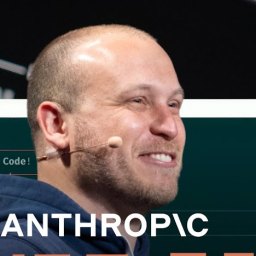
Simons demonstrates Bolt turning prompts into web and native mobile apps, including a Spotify-style app and a meditation app. He shows a live phone preview through Expo Go, image-guided UI changes, and how to undo edits or refresh a broken development environment.
We Were Going to Shut Down Our Company…Now We’re Worth $700M
Speaker
Eric Simons, CEO of Bolt, joins Peter Yang to demonstrate Bolt and discuss how StackBlitz went from considering a shutdown to rapid growth.
For production work, Simons recommends planning pages and behavior, then splitting the plan into concrete tasks. He suggests building and checking the UI first, then adding databases, authentication, and other functionality in chunks. When repeated bug fixes fail, he advises stepping back to gather context or asking for help.
Simons traces StackBlitz to a long effort to run a development environment inside the browser. After struggling to find a viable business, the team revisited Bolt as models improved, greenlit it on July 1, and launched in October. He says Bolt reached $20 million in ARR in its first two months.
Simons says Bolt runs its computing on users’ devices rather than provisioning a cloud VM for each person, which he connects to lower latency, offline editing, and a more generous free tier. He says opening Bolt’s core and system prompts helped the community test models, improve prompts, and contribute features.
Simons says Bolt aims to serve developers as well as product managers, designers, and entrepreneurs, while keeping the tool powerful and reliable. Because models may quickly make some product work obsolete, he weighs which investments will last. He sees rapid prototyping as a way to get ideas in front of customers sooner and learn whether they solve a real problem.
Takeaways
- Write down the pages and behaviors you need, then give the coding tool one concrete task at a time.
- Finish and review the UI before adding authentication, databases, and business logic.
- If repeated bug fixes fail, pause and gather more context instead of retrying the same prompt.
- Use prototypes to get customer feedback early, before investing heavily in implementation.
- In fast-changing AI products, prioritize work that remains useful as models improve.
Mentioned in this talk




Search inside this talk
What was claimed 15
- built
 StackBlitz built Bolt
“try to replicate StackBlitz’s success with Bolt.new”
3:01inWhy Bolt.new Won and Most DevTools AI Pivots FailedYouTube Verified5 sources· Talk, Web, Job posting· archived
- metricBolt: 3 million users within four months of launch
“exploded from zero to three million users”
YouTube Unverified1 source· Talk
- role atEric Simons is CEO at Bolt
“Eric, the CEO of Bolt.”
YouTube Unverified1 source· Talk
- featureBolt: Builds native mobile apps for iOS and Android from prompts
“we also support building native mobile apps for iOS and Android”
YouTube Unverified1 source· Talk
- integrates with
“We partner with Expo”
YouTube Unverified1 source· Talk
- integrates with
“if we want to add a Supabase database”
YouTube Unverified1 source· Talk
- integrates with
“our web build uses Netlify for hosting”
YouTube Unverified1 source· Talk
- uses
“they could make the best coding models by doing a ton of reinforcement learning”
YouTube Unverified1 source· Talk
- foundedAlbert foundedStackBlitz
“I started this with my co-founder, Albert.”
YouTube Unverified1 source· Talk
- feature
 Claude: An early preview was good enough to prompt StackBlitz to greenlight Bolt
“In May, we got an early preview of Claude”
YouTube Unverified1 source· Talk
- metricBolt: $20 million in ARR in the first two months
“in the first two months alone, we went from zero to $20 million in ARR”
YouTube Unverified1 source· Talk
- usesBolt uses web containers
“the technology we've been working on—building the operating system in the browser, which we call WebContainers”
YouTube Unverified1 source· Talk
- featureBolt: Runs computing locally on the user's device and can work offline
“all the computing is done locally on the user's device”
YouTube Unverified1 source· Talk
- featureBolt: Open source system prompts and product; can be run locally or self hosted
“We decided to open-source the core of Bolt”
YouTube Unverified1 source· Talk
- metricStackBlitz: 25 people
“our team is only 20 people—25 as of this week”
YouTube Unverified1 source· Talk