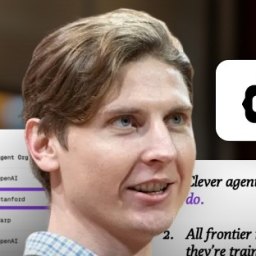
Closed-source products offer less visibility into code quality and test coverage than open-source projects. To assess them, identify customers and ask about their experience deploying the product at scale, along with the vendor’s support and service-level agreements.
Are Open Source technologies like React Native a sustainable business choice?
An unnamed Callstack guest discusses how to assess and reduce the business risks of closed-source software, in conversation with an unnamed host.
Some commercial software starts at a reasonable price but becomes costly after a company crosses a threshold. That can leave customers committed to a solution whose licensing has become unreasonable.
Source code escrow can require a vendor to provide specified materials if it closes, such as a working Docker container and the full source repository with its history. For a $10 million deal, the guest describes it as an insurance policy; contract terms can also address whether customers may hire employees if the company becomes insolvent.
A privately funded vendor’s investors and growth expectations may signal future changes to licensing or support. The guest says some companies tighten terms for existing customers or add consulting services as they pursue aggressive growth. If licensing costs $2 million a year and on-site services add $500,000, building on open source may offer more control over operating costs.
The host summarizes that open-source and closed-source solutions each have benefits and drawbacks. Choosing either requires assessing its fit and reducing the risks that come with the decision.
Takeaways
- Ask current customers whether a closed-source product works at scale and how its vendor handles support.
- Model licensing costs beyond today’s company size and check for pricing thresholds.
- For a high-value vendor contract, consider escrow terms that specify deliverables if the vendor closes.
- Review a private vendor’s investor expectations as a clue to possible future pricing or support changes.
- Compare the full cost of closed-source licensing and services with the cost of operating an open-source alternative.
Mentioned in this talk


Search inside this talk
What was claimed 5
- feature
 ESLint: Can be used to gauge a codebase.
“use ClamAV, ESLint, or whatever you want to gauge the codebase’s complexity and test coverage”
YouTube Unverified1 source· Talk
- featureClamAV: Can be used to gauge a codebase.
“use ClamAV, ESLint, or whatever you want to gauge the codebase’s complexity and test coverage”
YouTube Unverified1 source· Talk
- metricService-level agreement: Example threshold: more than 24 hours of downtime; example penalty: $10,000 per hour.
“down for more than 24 hours, you pay your own customer $10,000 for every hour”
YouTube Unverified1 source· Talk
- featureService-level agreement: May specify a payment to the customer for each hour of downtime beyond a threshold.
“if their service is down for more than 24 hours, you pay your own customer $10,000 for every hour of downtime”
YouTube Unverified1 source· Talk
- featureSource code escrow: Can provide a customer with a working container and the full source repository and history if the company fails.
“if the company goes belly up, it has to give you something specific, such as a working Docker container”
YouTube Unverified1 source· Talk