Patel says Anthropic’s revenue grew about 10x annually for three years, reaching $9 billion last year, and estimates $100 billion to $150 billion this year if that pace continues. Meanwhile, lab compute grows about 3x a year. He identifies three ways to bridge the gap: higher margins, higher compute prices, or a larger share of compute going to inference.
Why smarter AI models could drive up compute prices 10x
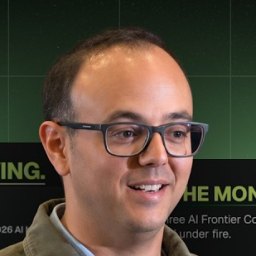
Dwarkesh Patel, podcast host and narrator, explains how AI model progress could raise compute prices and reshape competition; he presents the argument on his podcast, with no guest stated.
Patel says labs would rather spend compute on training and experiments than become cloud providers focused on inference. That leaves higher margins or higher compute prices as the main ways to reconcile revenue and compute growth. He cites Google’s reported $900 million monthly payment for 110,000 GPUs rented from SpaceX, at twice the spot price, while spot prices had already risen more than 40% since February.
Patel argues that smarter models could earn more from the same hardware. As an illustration, he estimates that an H100 running a human-level software engineer could be worth over $250,000 a year at current software-engineer prices, more than 15 times its current spot price. He allows that a sudden supply of AI labor could reduce its marginal value, but says innovation and specialization may keep the value of labor, and compute, high.
If leading labs can monetize compute better, Patel says they may outbid smaller competitors and command higher margins. More efficient models could justify a premium because they use less of an expensive resource to produce the same result. He also suggests that consumer applications may be priced out if labs are willing to pay more for tokens used in AI research.
Patel compares his scarcity argument with the Simon-Ehrlich commodities bet, while arguing that compute supply is less elastic than metal supply. He says annual capacity growth depends on Moore’s Law, new fabs and wafer allocation, and sees limits in each, including ASML EUV machine production and AI taking a growing share of TSMC’s leading-edge capacity. He frames higher prices as a feature of the current pre-singularity period and says compute could become cheap again if robots can build chips from raw materials.
Takeaways
- Track revenue growth against compute growth; a widening gap may show up as higher margins, higher compute prices, or more inference spending.
- When forecasting AI costs, account for the value models can generate per unit of compute, not just hardware prices.
- Model efficiency can create economic value by producing the same result with fewer tokens or less compute.
- Smaller AI companies may face pressure when they compete with frontier labs for scarce compute.
- Assess compute supply constraints across chip manufacturing, equipment availability and wafer allocation.
Mentioned in this talk


Search inside this talk
What was claimed 11
- metric
 Anthropic: Revenue grew 10x year over year for three consecutive years; ended the previous year at $9 billion; speaker estimates $100 billion to $150 billion by the end of the current year.
“For the last three consecutive years, Anthropic's revenue has grown 10x year over year”
YouTube Unverified1 source· Talk
- metricAnthropic: Lab compute grows about 3x year over year, compared with revenue growth of 10x year over year.
“lab compute only grows 3x year over year”
YouTube Unverified1 source· Talk
- metric
 OpenAI: Spent about one quarter of its compute on inference in 2024; speaker estimates the share is now closer to 50% or higher.
“OpenAI was spending just a quarter of its compute on inference”
YouTube Unverified1 source· Talk
- usesRents 110,000 GPUs, a blend of GB200s and GB300s, for $900 million per month.
“Google, for example, is paying $900 million a month for 110,000 GPUs”
YouTube Unverified1 source· Talk
- metric
 H100: At current software engineer prices, an H100 equivalent running a human-level software engineer could generate over $250,000 a year in value, more than 15x its current spot price.
“that H100 should rent for over $250,000 a year”
YouTube Unverified1 source· Talk
- metric
TSMC: At leading-edge N3 nodes, AI wafer allocation is projected to rise from 60% to 86% by the end of next year.
“AI will have gone from 60% to 86%”
YouTube Unverified1 source· Talk
- featureMercury: Command is a built-in AI feature for automating transaction categorization.
“Command, Mercury's built-in AI”
YouTube Unverified1 source· Talk
- feature
 Command: Proposes transaction categories, provides a rationale, and uses vendor, purchaser, notes, and memos as context.
“Command proposes a category for each transaction and provides its rationale”
YouTube Unverified1 source· Talk
- integrates withMercury integrates with QuickBooks
“Once all this work is done in Mercury, it syncs everything with QuickBooks”
YouTube Unverified1 source· Talk
- featureColumn N.A.: Provides banking services for Mercury.
“Banking services are provided through Choice Financial Group and Column N.A.”
YouTube Unverified1 source· Talk
- featureChoice Financial Group: Provides banking services for Mercury.
“Banking services are provided through Choice Financial Group”
YouTube Unverified1 source· Talk