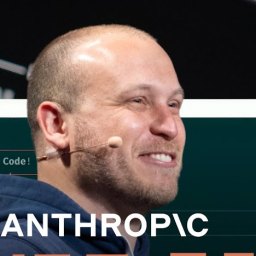
Kelvin describes Codex’s early idea of agents working like coworkers who take a task and return with a pull request. He and the hosts discuss how Claude Code’s CLI encourages a different workflow from an IDE, including delegating codebase exploration to subagents with separate context windows.
We're All Addicted To Claude Code
#Coding Agents#Context Engineering#Developer Tools#Software Architecture#Open Source#Agent Security#Engineering Management
Speaker
Kelvin French-Owen, cofounder of Segment and an early Codex builder at OpenAI, joins YC’s Lightcone podcast to discuss coding agents with the hosts, including Gary.
The hosts and Kelvin argue that easy installation helps coding tools spread from individual engineers upward, while enterprise sales bring different security and control concerns. For building agents, Kelvin says context management is central: tools can use subagents, grep, and directory structure to find relevant code. He also says open-source code and documentation give agents material they can inspect and recommend.
Kelvin recommends reducing boilerplate, using well-structured packages, and giving agents tests, linting, and code review so they can check their work. He warns that agents tend to add code and can get stuck with poor context; he often clears context when it passes 50% usage. He says testing substantially sped up his work after he improved coverage.
Kelvin contrasts Claude Code’s human-like tool use with OpenAI’s emphasis on models that can handle longer tasks. He expects experienced engineers to benefit because they can direct work and judge architectural choices, while newer engineers still need to learn systems fundamentals. He also imagines smaller companies with personal cloud agents, and argues that product primitives and data systems will remain important as agents generate custom software.
Kelvin identifies context limits and agent orchestration as constraints, including how to verify merged code and bring in information from tools. He describes an agent finding a Rails job queue bug by tracing framework internals, and says Codex has caught complex behavior across multiple files that Opus missed. The conversation also covers prompt injection, sandboxing, and the tradeoffs of skipping permissions.
Takeaways
- Keep agent tasks focused and provide relevant code context through search, structure, or subagents.
- Give agents tests and other checks so they can verify changes as they work.
- Review agent output for duplicated code and architectural decisions, especially in unfamiliar parts of a codebase.
- Clear or refresh context when an agent starts losing track of the task.
- Keep learning core systems concepts and keep experimenting as agent capabilities change.
Mentioned in this talk









Search inside this talk
What was claimed 12
- uses
“create Codex at OpenAI”
YouTube Unverified1 source· Talk
- foundedKelvin French-Owen founded Segment
“before that he started Segment”
YouTube Unverified1 source· Talk
- role atKelvin French-Owen is worked on the Codex web project at
 OpenAI
“when I was at OpenAI, I was working on the Codex web project”
YouTube Unverified1 source· Talk
- usesdaily driver at the time of the conversation
“Claude Code is certainly my daily driver today”
YouTube Unverified1 source· Talk
- feature
 Claude Code: Runs Haiku subagents to traverse the file system and explore
“Each of those runs Haiku to traverse the file system”
YouTube Unverified1 source· Talk
- featureClaude Code: Spawns explore subagents that search in separate context windows
“it will typically spawn an explore subagent, or multiple ones”
YouTube Unverified1 source· Talk
- integrates withClaude Code integrates with MCP
“It captures runtime intelligence overhead via MCP”
6:36inFrom Blind Spots to Merged PRs: Continuous Agentic Performance OptimizationYouTube Verified5 sources· Talk
- usesClaude Code uses PostHogas a tool recommendation example
“If Claude Code says, “Use PostHog,” they're using PostHog.”
YouTube Unverified1 source· Talk