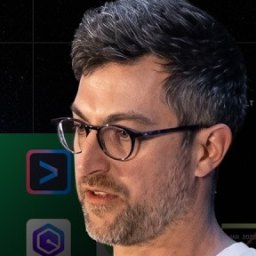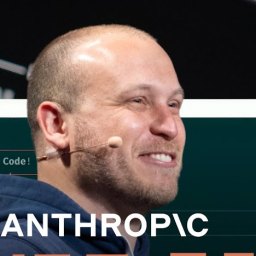
Cherny says each model learns different capabilities, sometimes in unexpected ways. He describes Opus 5 as able to run for days or weeks on tasks and says its resistance to prompt injection combines model alignment, an injection classifier, and an auto mode classifier.
We Cut 80% of Claude Code’s Prompt
Speaker
Boris Cherny, creator of Claude Code at Anthropic, joins Y Combinator’s host to discuss adapting AI products and workflows to increasingly capable models.
The Claude Code team removed more than 80% of its system prompt because Opus 5 handles behaviors earlier models needed instructions for. Cherny recommends ablation: remove prompts and tools, then add instructions back only when real use shows the model repeatedly needs them. He says evals can also become saturated after one to three model generations.
Cherny describes product overhang as capability that products fail to elicit, or product design that gets in the model’s way. He recommends giving models harder, higher-level tasks with clear guardrails and exit criteria. As examples, he describes a Claude Code workflow that rewrote more than 100,000 lines from Zig to Rust over 11 days, and a Swift rewrite of Claude’s desktop app that was still running after two weeks with screenshot comparisons for verification.
Cherny says dynamic workflows split a complex task into stages, using agents in sequence and in parallel; loops and cloud routines repeat tasks on a schedule. Anthropic uses routines to find dead code, add or remove tests, ship completed experiments, and unify duplicated abstractions across codebases. He says roughly 20 to 30 routines run daily, sometimes coordinating hundreds or thousands of agents.
Cherny qualifies that coding is solved for some of his work, while deep systems code, distributed systems, and precise UI verification remain difficult. He says strong users test the model, observe where it struggles, and adjust rather than relying on assumptions from earlier models. For students, he recommends combining computer science with practical skills such as product design, business, data science, and talking to users.
Takeaways
- Remove old prompts and tools periodically, then restore only what real use shows is needed.
- Give the model a hard task, clear guardrails, and a way to check its output.
- Try new models on tasks earlier models could not handle; capabilities can change between generations.
- Use staged agent workflows for complex work and scheduled routines for recurring maintenance.
- Pair computer science with product sense and user research to build useful things.
Mentioned in this talk


Search inside this talk
What was claimed 12
- builtBoris Cherny built
 Claude Code
“the creator of Claude Code”
YouTube Verified6 sources· Talk, Web· archived
- built
 Anthropic built Claude Code
“every major model provider building Claude Code, Codex, Gemini CLI”
0:14inBuilding an ACP-Compatible Agent LiveYouTube Verified15 sources· Talk, GitHub, Job posting, Web· archived
- usesBased on Crystal's mechanistic interpretability work.
“The classifier is based on Crystal's mechanistic interpretability work”
YouTube Unverified1 source· Talk
- usesRuns it for all traffic.
“which we run for all traffic”
YouTube Unverified1 source· Talk
- featureClaude Code: The system prompt was reduced by over 80%.
“deleted over 80% of the system prompt from Claude Code”
YouTube Unverified1 source· Talk
- uses
“We rewrote Bun in Rust.”
5:32inClaude Fable, Claude Tag, and Anthropic's CultureYouTube Verified2 sources· Talk
- usesClaude Code uses
 BunBun is the JavaScript runtime Claude Code is built on.
“Claude Code is built on the Bun JavaScript runtime”
YouTube Unverified1 source· Talk
- featureBun: A rewrite of over 100,000 lines ran for 11 days and was in production.
“It ran for 11 days and rewrote the entire codebase”
YouTube Unverified1 source· Talk
- featureClaude Code: Dynamic workflows can orchestrate dozens, hundreds, or thousands of agents.
“lets you orchestrate dozens, hundreds, or thousands of agents”
YouTube Unverified1 source· Talk
- usesOpus can use OpenCV to draw images.
“give Opus 5 OpenCV and have it draw”
YouTube Unverified1 source· Talk
- usesClaude Code uses
 SlackBoris describes running a Claude Code session in Slack.
“Claude Code is just Claude running in Slack”
YouTube Unverified1 source· Talk
- featureBoris Cherny: He says a Claude task rewriting the desktop app in Swift had been running for over two weeks.
“It’s been a little over two weeks, so 14 or 15 days.”
YouTube Unverified1 source· Talk