Kuo traces E.A.T. to a collaboration on a battery-powered neon letter for a Jasper Johns painting. Rauschenberg and Klüver wanted more artists to work with engineers, so they brought artists, performers, and Bell Labs engineers together to develop ambitious projects.
Experiments in Art and Technology
Speaker
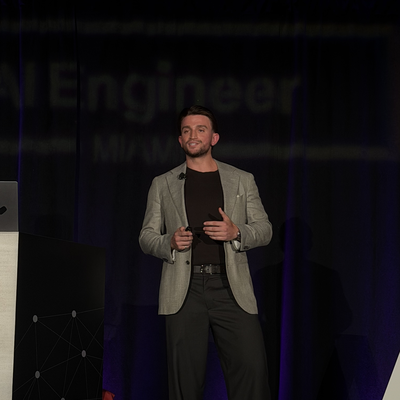
Artforum editor Michelle Kuo discusses the history and legacy of Experiments in Art and Technology (E.A.T.), founded in 1966 by artist Robert Rauschenberg and Bell Labs engineer Billy Klüver, with a Y Combinator host.
More than 40 artists and engineers worked on a performance series at New York’s Armory, attracting nearly 10,000 visitors over 20 nights. In Rauschenberg’s piece, a tennis match triggered amplified sounds and lights going out, followed by infrared images of people gathered in the dark. Early failures and delays were part of the experiment.
Kuo describes reactions to E.A.T. that ranged from excitement about technology’s possibilities to concern about its military ties during the Vietnam era. Automation House was intended as a place for job training, workshops, exhibitions, and E.A.T.’s headquarters. Its projects included early cable broadcasts of artists’ television programming and communication experiments connecting schoolchildren.
Many E.A.T. works were temporary, difficult to preserve, or never became conventional art objects. Kuo describes how a Rauschenberg sculpture with radios was updated over time as technology changed, raising questions about whether a work should preserve its original technology or its intended effect. She also discusses how artists use machines and systems to question authorship and artistic skill.
Kuo points to Trevor Paglen’s work making hidden technologies, such as drones and automated systems, perceptible. She argues that art and technology remain specialized fields and hopes for public institutions where people can encounter technological knowledge. Her recommended reading includes Fred Turner’s *From Counterculture to Cyberculture* and Maria Gough’s *The Artist as Producer*.
Takeaways
- Treat ambitious technical collaborations as experiments: failures and improvised fixes can be part of the work.
- Pair people across disciplines early, while making room for conflict over what technology can actually do.
- Consider how a project will age: preserve its original technology or update it to maintain its intended effect.
- Ask who controls a technology and who can access it, especially when its development happens behind closed doors.
- Create public ways for people to learn about and experience specialized technologies.
Mentioned in this talk


Search inside this talk
What was claimed 8
- works atBilly Klüver works at Bell Labsresearch scientist
“who was a research scientist at Bell Labs at the time”
YouTube Unverified1 source· Talk
- founded
“a group founded in 1966 by the artist Robert Rauschenberg and an engineer named Billy Klüver”
YouTube Unverified1 source· Talk
- founded
“a group founded in 1966 by the artist Robert Rauschenberg and an engineer named Billy Klüver”
YouTube Unverified1 source· Talk
- featureExperiments in Art and Technology: Brought artists and engineers together for collaborations
“They set about getting the word out and bringing artists and engineers together.”
YouTube Unverified1 source· Talk
- featureArmory performances: Performance series involving over 40 artists and engineers
“It involved over 40 engineers and artists: a performance series at the Armory in New York”
YouTube Unverified1 source· Talk
- featureAutomation House: Center for job training, automation workshops, art exhibitions, and E.A.T. headquarters
“create a center for job training, workshops about automation and technology, art exhibitions, and for E.A.T. to have its headquarters there”
YouTube Unverified1 source· Talk
- featurePepsi Pavilion: Inflated mirror dome with sound effects, projections, and performances
“they created a 180-degree hemispherical mirror dome that was inflated, made out of Mylar”
YouTube Unverified1 source· Talk
- featureTrevor Paglen: Uses specialized camera technology to photograph drone planes from remote sites
“He has a series of incredible photographs taken from remote sites with very special camera technology, capturing drone planes.”
YouTube Unverified1 source· Talk