Marco Arment built and ran Instapaper from 2008 to 2013, first as a website and bookmarklet, then with a text parser and an iOS app. Donohue says it addressed slow mobile networks, hard-to-read websites, and the lack of good phone reading apps by letting people save formatted articles for offline reading. As mobile reading improved and save-for-later features spread, he saw Instapaper’s broad early market become a more niche audience of people collecting content from many sources.
Operating Instapaper Through an Acquisition
Speaker
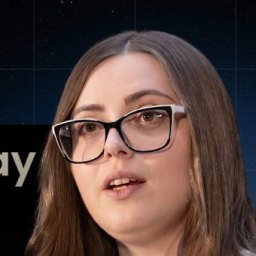
Brian Donohue, who led Instapaper before and after its Pinterest acquisition, discusses the product’s growth, business model, acquisition, and eventual spinout with a Y Combinator host.
When Donohue joined Betaworks as an iOS developer in 2013, Instapaper charged $3.99 for its app while competitors Pocket and Readability were free. A December 2013 Free App of the Week promotion brought over a million downloads, about 650,000 account signups, and a 10 to 15 percent increase in subscribers. Donohue used that result to support adding subscription features, raising the subscription price from $1 to $3 per month, and making the app free in 2014; monthly revenue recovered within six to eight months.
Instapaper received acquisition interest from several companies, including an eight-figure letter of intent that fell through during due diligence in 2015. Talks with Pinterest began in December 2015, and the acquisition closed in August 2016. Donohue says the team considered several paths for Instapaper inside Pinterest and recommended maintenance mode, since the small service could keep running with three or four hours of his time each week.
By early 2018, Donohue felt Instapaper’s trajectory inside Pinterest could lead to shutdown, so he asked CEO Ben Silbermann to consider keeping it as a business unit or spinning it out. He argued that the service could cover its costs with its existing users and a small team. After the spinout, he raised $80,000 from friends and family, cut server costs, and reported that the business was cash-flow positive while he worked to make it sustainable for the long term.
Donohue says Instapaper chose features by tracking user requests and weighing them against competitive advantage and the business model. To keep the product approachable, the team tucked power-user tools such as text-to-speech and speed reading into less prominent menus. He describes two core uses: reading saved articles later and keeping a searchable, offline archive.
Takeaways
- Test a pricing hypothesis with a promotion and measure what users do after the trial.
- A free download can remove a major barrier to adoption, even if revenue dips at first.
- During acquisition talks, treat a signed letter of intent as uncertain until the deal closes.
- A small, low-cost team can keep a niche product sustainable even when it is not a parent company priority.
- Use user requests to guide features, while considering whether each one supports the product’s economics.
Mentioned in this talk

Search inside this talk
What was claimed 13
- role atMarco Arment is CTO at
 Tumblr
“Marco was known for being the CTO of Tumblr.”
YouTube Unverified1 source· Talk
- foundedMarco Arment founded
 Instapaper
“Instapaper was started by a single guy named Marco Arment.”
YouTube Unverified1 source· Talk
- acquiredBetaworks acquiredInstapapermajority share
“Betaworks would have a majority share of Instapaper.”
YouTube Unverified1 source· Talk
- role atBrian Donohue is iOS developer atInstapaper
“I was hired in July 2013, and I was not hired to run Instapaper. I was hired as an iOS developer for Instapaper.”
YouTube Unverified2 sources· Talk
- metricInstapaper: Free App of the Week produced more downloads in one week than in the prior two years combined
“In that one-week period, we had more app downloads than we had in aggregate over the past two years.”
YouTube Unverified1 source· Talk
- featureInstapaper: Free app with a freemium subscription model
“In September 2014, we made the application free and launched new subscription pricing.”
YouTube Unverified1 source· Talk
- acquiredInstapaper acquired
 Pinterest
“From late 2014 to mid-2016, when we sold it to Pinterest.”
YouTube Unverified1 source· Talk
- role atBrian Donohue is manager of a team of eight software engineers atPinterest
“Starting in January this year, I’ve been managing a team of engineers.”
YouTube Unverified1 source· Talk