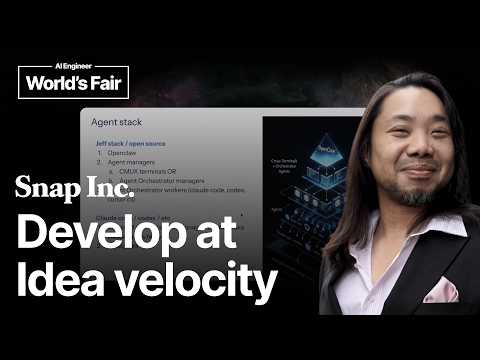
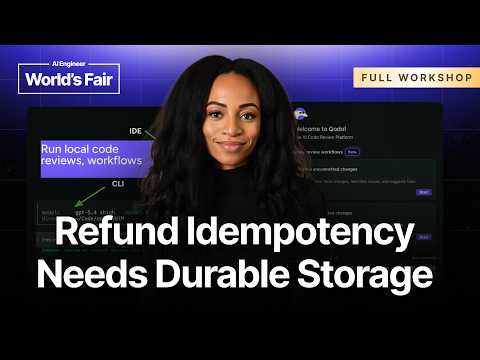
Tan argues that agents do useful work when they have roles, process, and review. He built GStack as a thin harness with specialist skills, saying the main problem is often missing context and unchecked guesses rather than model intelligence.
How to Make Claude Code Your AI Engineering Team
#Coding Agents#Agent Architecture#Product Discovery#Code Review#Computer-Use Agents#Engineering Productivity
Speaker
Garry Tan, president and CEO of Y Combinator, explains how he uses Claude Code and GStack to structure AI coding work like an engineering team.
Tan demonstrates GStack’s Office Hours skill by exploring an app that finds tax documents such as 1099-INT forms. Its questions probe customer evidence, the pain point, and existing alternatives, then help reframe document collection as a possible path to tax preparation referrals.
Office Hours produces three approaches, from a simple Gmail checklist to browser automation paired with a CPA marketplace. Tan favors the broader browser-based concept, then describes an adversarial review that found and fixed 16 issues across two rounds. Design Shotgun generates three dashboard options, and Tan selects a friendlier, card-based layout.
Tan outlines a workflow that includes planning, CEO and engineering review, coding, and a staff-level code review. He says GStack’s Playwright and Chromium tools let agents inspect pages, reproduce browser bugs, and run regression checks. He uses multiple parallel sessions and worktrees to handle separate projects and fixes.
Tan describes a final ship step for checking whether a pull request is ready to merge. He says he runs 10 to 15 Claude Code sessions and can process 10 to 50 pull requests in a day, depending on meetings. He also says he reviews community contributions carefully because he is concerned about supply chain attacks.
Takeaways
- Give agents clear roles, project context, and review steps to reduce plausible but broken code.
- Use structured questions to test customer evidence and rethink a product idea before implementation.
- Compare multiple approaches, then review the chosen plan for missing failure handling, privacy, and edge cases.
- Automate browser-based QA with tools that can reproduce the interactions users actually perform.
- Parallelize independent work in separate branches or worktrees, while keeping human review in the merge process.
Mentioned in this talk




Search inside this talk
What was claimed 13
- foundedco-founder
“founder of Posterous”
0:00inDesign for StartupsYouTube Verified3 sources· Talk
- role atGarry Tan is runs Y Combinator full-time at
 Y Combinator
“I'm Garry, president and CEO of Y Combinator.”
YouTube Verified7 sources· Talk
- acquired
“Posterous, a microblogging platform that sold to Twitter”
YouTube Unverified1 source· Talk
- built
“I built GStack to encode this three weeks ago”
YouTube Verified2 sources· Talk
- featuregstack: Turns Claude Code into an AI engineering team through specialist skills and workflows
“turns Claude Code into an AI engineering team for you”
YouTube Unverified1 source· Talk
- featuregstack: Office Hours skill helps reframe product ideas before building
“It starts by asking six forcing questions to help you reframe your product”
YouTube Unverified1 source· Talk
- integrates with
“GStack is built into Conductor right now”
YouTube Unverified1 source· Talk
- featuregstack: Design Shotgun generates multiple interface design versions for selection
“It'll generate multiple AI versions and then ask us questions about them.”
YouTube Unverified1 source· Talk