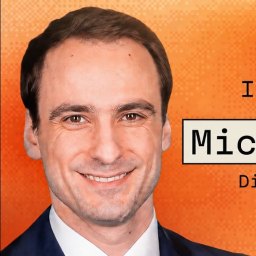
Kratsios says his goal in government is to help American technology lead by creating conditions for innovation. Policy decisions involve many agencies, so the White House brings them together; commercial drone rules, for example, must account for both FAA requirements and security around nuclear sites.
Inside the White House's AI Strategy
Speaker
Michael Kratsios, director of the White House Office of Science and Technology Policy, discusses U.S. AI strategy and technology policy with Y Combinator host at AI Startup School.
Kratsios says the administration supports both open and closed AI ecosystems, and points to the AI Action Plan’s commitment to open source. He argues that fixed regulatory thresholds can age poorly, citing the EU AI Act being finalized before ChatGPT and the difficulty of updating rules once they are set.
Kratsios says the White House seeks input from companies of different sizes and argues that a national AI standard could help startups avoid a patchwork of state rules. He distinguishes “born-free” technologies, such as the early internet, from “born-in-captivity” technologies such as commercial drones, where government approval can block commercialization.
Kratsios describes a new science report as a response to a changed research landscape: private companies and philanthropy now fund about 70% of U.S. R&D, while government funds about 30%. He expects AI to change scientific work and describes autonomous cloud labs that could run experiments, assess results, and test new hypotheses.
Kratsios says quantum computing deserves more attention and notes a federal goal to build a scientifically relevant quantum computer by 2028. He favors congressional action on a national AI framework and clearer protections around AI outputs and creators’ rights, while cautioning against legislating too quickly in areas where markets are still developing.
Takeaways
- Track which agencies control the approvals your product needs, since policy often spans several of them.
- Build for rules that may evolve; fixed thresholds can become outdated as technology changes.
- Find ways to contribute to public consultations so startup needs reach policymakers.
- Check whether your product is blocked by an approval requirement, and identify the specific rule or waiver involved.
- For AI research products, consider how automation could connect hypothesis generation, experiments, and evaluation.
Mentioned in this talk
 Y CombinatorOffice of Science and Technology Policy
 Scale AILittle Tech AssociationBoom SupersonicAI Action Plan
 ChatGPT
 FableMythosConcordeScience: The Endless Frontier
 AIautonomous vehiclesDronessupersonic flightAutonomous cloud laboratoriesQuantum information science and technologyopen sourceVannevar Bush
Search inside this talk
What was claimed 7
- previously atMichael Kratsios previously atScale AIChief operating officer
“He was chief operating officer of Scale AI between government tours.”
YouTube Unverified1 source· Talk
- role atMichael Kratsios is Director at Office of Science and Technology Policy
“Michael Kratsios is director of the White House's Office of Science and Technology Policy.”
YouTube Unverified1 source· Talk
- featureAI Action Plan: Commitment to open source
“The first thing we talk about in chapter one is a commitment to open source.”
YouTube Unverified1 source· Talk
- launchedY Combinator launched Little Tech Association
“Y Combinator, along with a handful of other companies, helped spin up a trade association called the Little Tech Association.”
YouTube Unverified1 source· Talk
- featureOffice of Science and Technology Policy: Coordinates science and technology policy across federal agencies
“Each of us runs policy processes on the topics at hand.”
YouTube Unverified1 source· Talk
- featureAutonomous cloud laboratories: Run experiments, evaluate results, and generate new hypotheses in a loop without human intervention
“autonomous cloud labs running experiments on a loop without human intervention”
YouTube Unverified1 source· Talk
- metricQuantum information science and technology: Department of Energy goal: build a scientifically relevant quantum computer by 2028
“He set a pretty ambitious goal for the Department of Energy to build a scientifically relevant quantum computer by 2028.”
YouTube Unverified1 source· Talk