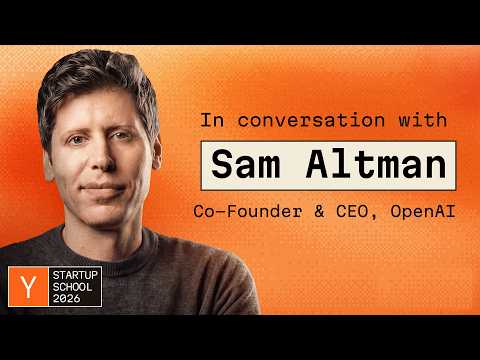

Dalton and Michael point out that successful people sometimes recommend strategies they did not follow themselves. They use Sam Altman, Elon Musk, and Peter Thiel as examples, while noting that their advice can still be valuable.
Why You Shouldn't Copy Your Tech Idols
Speakers
Y Combinator hosts Dalton and Michael discuss why founders should study the full histories of tech leaders before following their advice.
Before OpenAI, Altman founded Loopt after leaving Stanford. It raised a relatively small amount, had a small team, and grew through iteration and the Y Combinator network. The hosts say founders should not assume they can begin by raising huge sums for a major research lab.
Musk told one host that he started Zip2 and PayPal to make enough money to pursue space travel. The hosts describe those early companies as conventional startups, followed by SpaceX and his investment in Tesla. Their lesson is that most founders need to build resources and experience before attempting a more ambitious second step.
Thiel criticizes college, but he attended Stanford as an undergraduate and earned a law degree there before working at a law firm and a bank. The hosts suggest those experiences may have shaped his later success, though they acknowledge they cannot prove that with an A/B test.
The hosts say leaders may give advice they wish they could have followed earlier, often with good intentions. They recommend learning the full backstory behind advice and tailoring guidance to a founder’s situation and advantages. The hosts say broad public content cannot be personalized in the way YC office hours can.
Takeaways
- Study a role model’s actual career path before copying their advice.
- Treat advice to raise huge sums or pursue ambitious projects as conditional on your ability to do so.
- Consider how earlier jobs, education, and setbacks may have shaped someone’s later judgment.
- Use advice as input, then adapt it to your own resources, experience, and advantages.
Mentioned in this talk


Search inside this talk
What was claimed 7
- previously atSam Altman previously at
 Y CombinatorPartner, then President
“you were in the very first batch of Y Combinator in 2005”
0:34in"Never a Better Time to Do a Startup"YouTube Verified3 sources· Talk, Web· archived
- foundedSam Altman founded
 LooptCo-founder and CEO
“you were in the very first batch of Y Combinator in 2005 with a location-sharing company called Loopt”
0:34in"Never a Better Time to Do a Startup"YouTube Verified4 sources· Talk, Web· archived
- foundedFounder, CEO, chairman and CTO
“after he had started SpaceX”
0:35inWhat are some things successful founders have in common?YouTube Verified5 sources· Talk, Web· archived
- metricSam Altman: Worked at Y Combinator for about seven years
“Sam was our colleague for about seven years.”
YouTube Unverified1 source· Talk
- featureLoopt: Mobile social product for seeing where friends were in the city
“It was a mobile social product to see where your friends were in the city.”
YouTube Unverified1 source· Talk
- invested in
“Then he became an investor in Tesla.”
YouTube Unverified2 sources· Talk
- previously atPeter Thiel previously at
 Stanford UniversityUndergraduate and law student
“He did undergrad, then got a law degree from Stanford.”
YouTube Unverified1 source· Talk