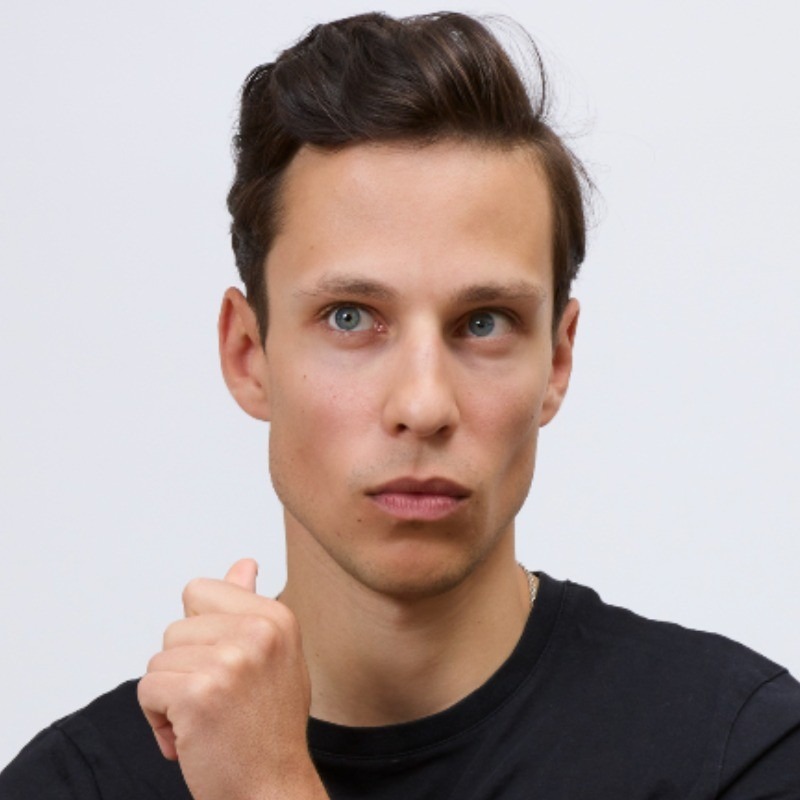
Siroker says a hearing aid helped him recognize how much his hearing had declined, inspiring him to explore technology that augments human abilities. Limitless first built a meeting transcription bot called Scribe, then Rewind, a Mac app that captured activity locally. The company later launched its cloud service and Pendant, aiming to help people recall conversations and stay present instead of taking notes.
Building the World’s Most Wearable AI
Speaker
Dan Siroker, CEO of Limitless and co-founder of Optimizely, talks with Peter Yang about building an AI wearable, product and team decisions, and balancing work with family.
Siroker says phones and watches restrict always-on audio capture, so Limitless built a Pendant to record without requiring users to remember to switch it on. He describes Consent Mode, which withholds recording until a new speaker gives verbal consent, and Confidential Cloud, which the company says combines local-app privacy protections with cloud access. He frames meetings as a chance for connection when people are not distracted by note-taking and follow-up tasks.
Siroker recommends setting a launch date and prioritizing quality and time while cutting scope. He points to Optimizely, where a simple way to run A/B tests mattered more than advanced features such as multivariate testing. At Limitless, he says the team focused on the launch and accepted that other tasks, such as partnerships and email, would wait.
Siroker says founders should identify the two to four priorities that can determine a company’s success and keep the main one in focus. He advises hiring only when a role’s absence creates a clear problem, citing Optimizely’s experience raising and then spending large sums on roles the company may not have needed. He says Limitless’s 20-person team ships faster than Optimizely’s hundreds did, and describes an engineer who turned 185 roadmap votes into support for 33 languages within days.
Siroker aims to finish work by 5 p.m. on weekdays so he can have dinner with his three children and help with their bedtime routine. He says the approaching deadline makes his final 15 minutes unusually productive. His advice is to narrow personal commitments, state priorities clearly, and accept that some requests will wait.
Takeaways
- Set a launch date, protect quality, and cut features that do not support the core use case.
- Make product priorities visible across the team so engineers can spot useful, low-effort improvements.
- Hire when a real problem becomes painful, rather than staffing for a larger future company.
- Treat constraints on time as a prompt to cut scope and focus on the most important work.
Mentioned in this talk

Search inside this talk
What was claimed 15
- foundedDan Siroker founded Optimizely
“Dan also co-founded Optimizely.”
YouTube Verified3 sources· Talk
- ceo ofDan Siroker CEO of LimitlessCEO
“Dan Siroker, CEO of Limitless.”
YouTube Unverified1 source· Talk
- launchedLimitless launched Limitless Pendant
“I think you rebranded Limitless, and now you have the pendant.”
YouTube Unverified1 source· Talk
- metricLimitless: 20,000 total customers
“and 20,000 total customers.”
YouTube Unverified1 source· Talk
- metricLimitless Pendant: 10,000 orders
“We’ve got 10,000 orders of the pendant.”
YouTube Unverified1 source· Talk
- feature
 Scribe: Online meeting bot that joins meetings and transcribes them
“It was an online meeting bot that would join meetings and transcribe them.”
YouTube Unverified1 source· Talk
- built
“The very first idea we tried and launched pretty quickly was called Scribe.”
YouTube Unverified1 source· Talk
- featureRewind: Mac app that captures activity and stores and computes it locally
“A Mac app that would capture everything you see, say, and hear ... store it all locally; and compute everything locally.”
YouTube Unverified1 source· Talk