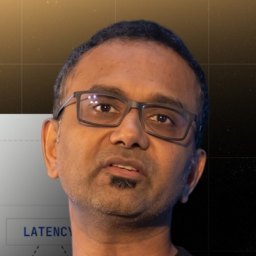
Wang’s goal is a model that can control different robots across the tasks they are physically capable of. He describes a gradual path: start with a capable base model, deploy it with human help when needed, and improve it through experience in real settings.
The GPT Moment for Robotics Is Here
Speakers
Qiong Wang, co-founder of Physical Intelligence, discusses general-purpose robotics, model development, and ways to build robotics businesses with Y Combinator’s The Light Cone.
Wang traces progress from SayCan’s language-based planning to PaLM-E and RT-2, which connected vision-language models to robot actions. Open X-Embodiment combined data from different robots; Wang says its generalist policy performed 50% better than policies optimized for individual platforms. He also cautions that the dataset did not solve robotics evaluation and is small relative to the field’s overall data needs.
Wang and Quan Vuong describe work with Weave on folding varied, unseen laundry items, and with Ultra on packing products into shipping pouches in a warehouse. The Ultra system ran across a full day with some human intervention. Wang says the approach turns some engineering challenges into operational ones, such as finding suitable tasks and collecting useful data.
Physical Intelligence runs many robot evaluations with models hosted in the cloud, using overlapping action chunks to account for inference delays. Wang’s advice for vertical robotics startups is to understand existing workflows, find where robots can help, use scrappy hardware, collect data, and evaluate performance. A mixed human and robot system can help reach economic break-even before scaling deployments.
Wang says Physical Intelligence publishes research and open sources the same π0 and π0.5 model weights it uses internally, with the aim of helping other teams build. He describes gaps in robotics infrastructure, including tools for data collection, annotation, and evaluation. He also shares a prototype that monitors large pre-training runs and takes corrective action, improving compute utilization by about 50%.
Takeaways
- Choose robot tasks by studying the workflow and where automation can make a meaningful difference.
- Design data and evaluation systems to handle changes across robots and hardware versions.
- Use human assistance during deployment to gather corrections and build toward greater autonomy.
- Track the economics of a deployment; reaching break-even can make it possible to scale.
- Look for shared infrastructure needs, such as teleoperation, data annotation, and evaluation services.
Mentioned in this talk




Search inside this talk
What was claimed 8
- foundedQiong Wang founded Pi Labs
“He's one of the co-founders of Physical Intelligence”
YouTube Unverified1 source· Talk
- featurePi Labs: Builds a model intended to control any robot for any task it is physically capable of
“build a model that can control any robot to do any task it's physically capable of”
YouTube Unverified1 source· Talk
- metricOpen X-Embodiment: A generalist trained on data from 10 robot platforms was 50% better than specialists optimized for individual platforms
“the interesting result from Open X is that it was 50% better”
YouTube Unverified1 source· Talk
- builtlaundry-folding robot system
“a system we built together, folding a really diverse set of laundry items”
YouTube Unverified1 source· Talk
- builtrobot system for picking items and placing them into shipping pouches
“The task we're focusing on together here is this”
YouTube Unverified1 source· Talk
- uses
“we refer to it as real-time chunking”
YouTube Unverified1 source· Talk
- featurePi Labs: open-sources pretrained model weights that it also uses internallyopen-sources pretrained model weights that it also uses internally
“The pretrained model weights that we open-source are also the weights we use internally for π0 and π0.5”
YouTube Unverified1 source· Talk
- featurePi Labs: open-sources pretrained model weights that it also uses internallyopen-sources pretrained model weights that it also uses internally
“The pretrained model weights that we open-source are also the weights we use internally”
YouTube Unverified1 source· Talk