Epstein works backward from a goal of one new customer. In his example, a 10% demo-to-customer rate, a 25% response-to-demo rate, a 10% open-to-response rate, and a 50% send-to-open rate mean sending 800 emails to get one customer. He says to track each stage, learn conversion rates through trial and error, and improve weak points before scaling.
How To Convert Customers With Cold Emails
Speaker
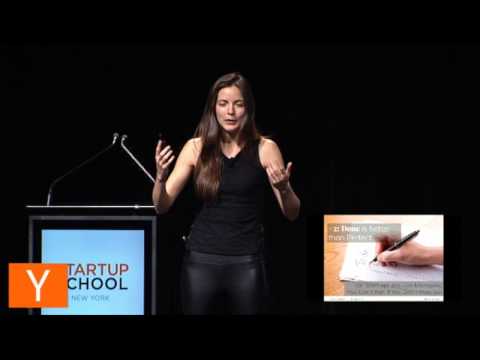
Aaron Epstein, a group partner at Y Combinator, explains how to write cold emails that convert, with examples from his startup experience and YC companies.
Epstein says better targeting is the highest-leverage way to improve opens and responses: 100 well-targeted emails may outperform 1,000 untargeted ones. He recommends a personal sender name and short, relevant subject lines, and says to adapt the channel to the recipient and industry. He also describes finding contacts through introductions, LinkedIn, company websites, and email-finding tools.
Epstein lays out seven principles: set one specific goal, sound human, personalize, keep it short, establish credibility, focus on the reader, and end with a clear call to action. He recommends writing directly in the email editor for a specific person, then reading the message aloud to catch awkward wording. Useful personalization can include product knowledge or an uncommon shared connection, while credibility can come from YC, past work, customers, or mutual contacts.
Epstein recommends two to four manual follow-ups, spaced a few days apart, while accepting that a recipient may not respond. His examples show why targeting matters: a shipping pitch was irrelevant to his digital design asset company, while a message connecting over the University of Maryland got his attention. A smoothie startup improved its pitch by offering a free office smoothie party in exchange for feedback, making the recipient benefit clear.
Epstein advises founders to start manually, track conversion rates, and block time to send dozens of emails per day. Once the process works, they can explore automation. He says founder-sent, personalized messages can make a small startup's attention to each recipient an advantage.
Takeaways
- Work backward from the customer goal to estimate the volume needed at each funnel stage.
- Improve targeting before increasing send volume; poor-fit leads will weaken results as you scale.
- Write each email for one recipient, with one clear and easy next step.
- Start manually, measure where recipients drop off, and automate only after the approach works.
- Follow up politely after a few days, and make the recipient's benefit clear.
Mentioned in this talk

Search inside this talk
What was claimed 7
- role atAaron Epstein is group partner at
 Y Combinator
“I’m Aaron Epstein, a group partner at YC.”
YouTube Verified2 sources· Talk
- metriccold outreach: A warm introduction can produce a conversion rate two to three times that of a regular cold email.
“conversion rate two to three times what you’d get”
YouTube Unverified1 source· Talk
- metricconversion funnel: Illustrative B2B funnel: 10% demo-to-customer, 25% response-to-demo, 10% open-to-response, and 50% sent-to-open; 800 emails yield one customer.
“you need to send 800 emails in order to get one customer conversion”
YouTube Unverified1 source· Talk
- metriccold outreach: The speaker recommends sending dozens of emails per day, possibly 50 per day, for meaningful results at the example rates.
“possibly even 50 per day”
YouTube Unverified1 source· Talk
- featurepersonalization: Write to one specific person, research them, and make the email sound like a human wrote it.
“write the email with that specific person in mind”
YouTube Unverified1 source· Talk
- foundedAaron Epstein founded Creative Market
“Creative Market, which was my startup.”
YouTube Unverified1 source· Talk
- featureCreative Market: Marketplace for graphic design assets
“a marketplace for graphic design assets called Creative Market”
17:50inStartup Experts Reveal Their Favorite Pivot StoriesYouTube Verified2 sources· Talk