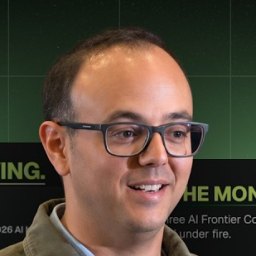
Stan describes spending five years at Stripe and three years at OpenAI, where he worked on large language models and math. He left research because he wanted to return to building products, and started Dust to apply language models to workplace tasks.
The Model-Agnostic AI Platform Betting That No Single Lab Will Win
Speaker
Stan Chudnovsky, co-founder of Dust and former Stripe and OpenAI employee, discusses building an AI workplace platform alongside frontier labs at a Y Combinator event.
Stan expects work to feel very different as AI changes how people spend their time, though he says the pace was hard to predict. He believes the technology is now beginning to reshape work across roles, after earlier products focused mostly on chat and narrow tasks. Dust is building a broad productivity platform, with collaboration and multiplayer AI as areas of focus.
Stan says broad platforms can be harder to explain and sell than products aimed at one industry, but frontier labs also help educate the market. Dust lets customers use different models because the best provider can change over time. He compares choosing a single model provider to designing a factory whose equipment only works with one energy source.
Stan argues that as models improve, vertical AI products will need defensibility beyond wrapping intelligence for individual users, such as network effects between users. Dust moved from flat seat pricing toward credits after agent usage grew and margins compressed. He also points to differentiated product design and improving open source models as ways product companies may compete with labs.
Stan says Dust raised $5.5 million at seed because it was building at the product layer and did not need funding for GPUs before product-market fit. He acknowledges that building from France added fundraising friction, though the founders valued doing it there. His closing advice is to find a problem and vision that can sustain you through the daily difficulty of building a company.
Takeaways
- Let customers switch models when provider quality and fit change.
- As models improve, vertical products need defensibility such as network effects.
- Tie AI pricing to usage when agent workloads can grow sharply.
- Raise for the work your product actually requires, not for fashionable spending.
- Choose a problem you can stay committed to through difficult stretches.
Mentioned in this talk


Search inside this talk
What was claimed 10
- previously atStan Chudnovsky previously at
 OpenAIworked there for three years
“I spent three years there working on large language models and math.”
YouTube Unverified1 source· Talk
- previously atStan Chudnovsky previously at
 Stripeworked there for five years
“I spent five years there.”
YouTube Unverified1 source· Talk
- foundedStan Chudnovsky founded
 Dust
“You started Dust.”
YouTube Unverified1 source· Talk
- featureDust: Collaboration and multiplayer AI direction
“We're going a lot toward collaboration and multiplayer AI.”
YouTube Unverified1 source· Talk
- featureDust: Model-agnostic workplace AI platform
“We're also model-agnostic.”
YouTube Unverified1 source· Talk
- metricDust: No GPU before product-market fit
“No GPU before PMF.”
YouTube Unverified1 source· Talk
- metricDust: Raised $5.5 million in seed funding
“We raised $5.5 million.”
YouTube Unverified1 source· Talk
- role atArthur Mensch is CEO at
 Mistral
“The way he grew into the role of CEO of a European lab.”
YouTube Unverified1 source· Talk