Stripe took nearly two years from its first line of code to public launch, partly because it needed banking partnerships. The Collison brothers installed the product with customers, watched how they used it, and followed up on errors and stalled signups. Collison says early teams can learn more by inspecting users’ behavior and feedback closely than by relying on metrics.
Running Your Company
#Product-Market Fit#Customer Feedback#Experimentation#Hiring & Talent#Organizational Design#AI Product Design
Speaker
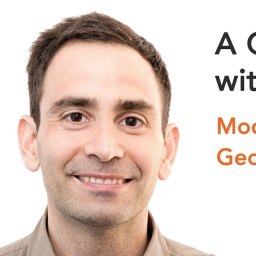
Patrick Collison, co-founder and CEO of Stripe, talks with a Y Combinator host about running Stripe, from early customer feedback to hiring, decision-making, and global growth.
Collison says he and his brother John run Stripe together, with responsibilities that lean toward their strengths: John spends more time with users, while Patrick focuses more on product and engineering. Their CEO and president titles do not settle every disagreement; they also consider who feels more strongly about a decision. He advises co-founders to establish an efficient way to decide instead of relying on consensus or voting.
Collison says Stripe’s hiring of Billy Alvarado improved its bank partnerships, an area where the founders lacked experience. Looking back, he wishes they had mapped the market and built the go-to-market organization to reach more of it sooner. Before product-market fit, he recommends keeping the team small and tightening the feedback loop; adding people is useful when they help the company respond faster to what it learns.
Collison says Stripe relied too much on consensus as it grew, and that companies need clearer decision-making and communication as they reach roughly ten to fifteen people. He describes balancing top-down decisions for speed with enough autonomy for people to raise problems and propose ideas. Stripe’s annual process invites employees to submit ideas they think may be bad but could work; Stripe Atlas began this way.
Stripe moved from a largely San Francisco-based organization toward major product and engineering hubs in San Francisco, Seattle, Dublin, and Singapore. Collison says the strategy reflects more geographically dispersed talent and Stripe’s ambition to serve businesses worldwide. He describes the goal as making it easier to start companies and serve customers across borders.
Takeaways
- Watch real users try your product; their confusion can expose problems that metrics miss.
- Agree on how co-founders will resolve disagreements before decisions become urgent.
- Before product-market fit, keep the team small enough to iterate quickly.
- As the organization grows, make decisions and priorities explicit.
- Invite unconventional ideas while staying selective about what the company pursues.
Mentioned in this talk




Search inside this talk
What was claimed 16
- ceo ofPatrick Collison CEO of
 StripeCEO
“Patrick is the co-founder and CEO of Stripe.”
YouTube Unverified1 source· Talk
- foundedJohn Collison foundedStripePresident
“My brother John and I started working on it full time in 2010.”
YouTube Verified4 sources· Talk, Web· archived
- foundedPatrick Collison foundedStripeCEO
“Patrick is the co-founder and CEO of Stripe.”
YouTube Verified5 sources· Talk, Web· archived
- launchedStripe: Public launch in September 2011
“We didn't launch until September 2011.”
YouTube Unverified1 source· Talk
- metricStripe: About 100 users by public launch
“By the time we publicly launched, we had about 100 users.”
YouTube Unverified1 source· Talk
- metricStripe: $20 billion valuation
“In the latest funding round Stripe is now worth $20 billion.”
YouTube Unverified1 source· Talk
- metricStripe: 200 million API requests a day
“You manage 200 million API requests a day.”
YouTube Unverified1 source· Talk
- metricStripe: 1,300 employees across nine offices
“Today, you have 1,300 employees across nine offices around the world.”
YouTube Unverified1 source· Talk