Graham argues that ambitious people benefit from spending time where their field is most concentrated, as earlier generations did in Paris for painting and Göttingen for mathematics. Silicon Valley offers more talented peers, more chance encounters with useful collaborators, and a faster pace. He says investors there also tend to decide more quickly because competition makes good opportunities harder to wait on.
Paul Graham, Founder of Y Combinator, Live from Stockholm
Speaker
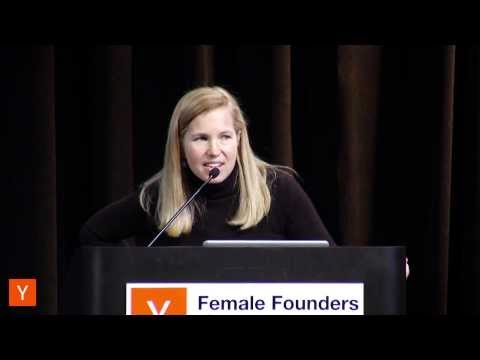
Y Combinator founder Paul Graham speaks live in Stockholm about whether founders should go to Silicon Valley and how returning founders can help Sweden become a startup hub.
Graham says that meeting successful founders makes their achievements seem difficult but possible, giving ambitious people a clearer standard to aim for. He points to Max, a Swedish founder at the event, as an example of both what someone can achieve and how hard they may need to work. He also describes Silicon Valley as a place where people often help founders without expecting an immediate return.
Graham connects his advice to visit Silicon Valley with his proposal for Stockholm: founders should go for a time and then return. He says returning founders can improve the quality of local startups, bring back investment, and spread startup practices. He presents Y Combinator as a concentrated way to experience the Valley’s founder community and investor pace over four to six months.
Graham says YC startups that return home are about half as likely to become unicorns as those that stay, while noting selection bias and the effect of Bay Area valuations. He argues that even lower financial outcomes can still be substantial and that where founders raise their children matters too. He sees an opening for Stockholm to become the Silicon Valley of Europe, if it has a place founders want to live and reaches a critical mass of startups.
Takeaways
- Spend time where the strongest peers in your field gather, even if you later return home.
- Use ambitious peers as a concrete benchmark for the effort and progress your goals require.
- Build relationships by helping others without keeping score.
- Returning founders can strengthen a local startup ecosystem through experience, investment connections, and shared practices.
- A startup hub needs a place founders want to live and enough founders to reach critical mass.
Mentioned in this talk

Search inside this talk
What was claimed 10
- foundedPaul Graham founded
 Y Combinator
“Paul Graham, Founder of Y Combinator”
YouTube Verified9 sources· Talk, Web· archived
- invested inYury Sagalov invested in Max
“invested immediately upon meeting Max”
YouTube Unverified1 source· Talk
- feature
 Sequoia: became interested in Dropbox after it visited Silicon Valleybecame interested in Dropbox after it visited Silicon Valley
“When Dropbox went out to Silicon Valley, they came to the attention of Sequoia.”
YouTube Unverified1 source· Talk
- metric
 Dropbox: First YC company to go public
“In 2018, Dropbox was the first YC company to go public.”
YouTube Unverified1 source· Talk
- featureSilicon Valley: Has a pay-it-forward culture in which people help others without expecting a reason
“There's a pay-it-forward culture in Silicon Valley”
YouTube Unverified1 source· Talk
- featureRon Conway: Helps people without tracking whether they are portfolio companies or keeping count of favors
“All he does, all day long, is help people.”
YouTube Unverified1 source· Talk
- metricY Combinator: Four to six months
“you can do it all in four to six months”
YouTube Unverified1 source· Talk
- featureY Combinator: Concentrates Silicon Valley startup founders and investor attention in a four-to-six-month program
“It's like a little super-valley within the Valley.”
YouTube Unverified1 source· Talk