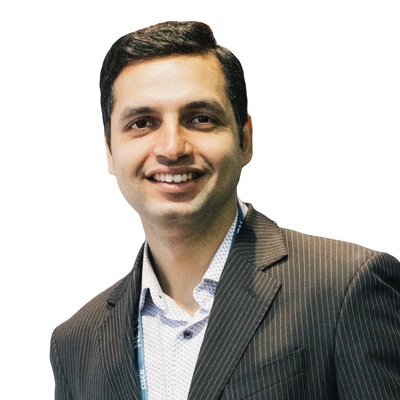
Brundage describes his report, “The Malicious Use of Artificial Intelligence,” as a survey of deliberate harms such as fake news, drone attacks, and offensive cybersecurity. He argues that AI needs norms similar to responsible disclosure in computer security, including for adversarial examples. Hwang focuses on how AI could make disinformation more believable and easier to produce.
A.I. Policy and Public Perception
Speakers
Miles Brundage of the Future of Humanity Institute and Tim Hwang, whose work spans Google and AI policy research, discuss AI misuse, public perception, governance, and safety with Y Combinator.
Hwang says it is difficult to predict which harmful uses will become common first. Brundage notes that physical applications can be costlier and harder to scale than digital ones, while autonomous drones show progress in real-world navigation. They discuss how a major self-driving incident or an AI-enabled cyberattack could shape public reaction, which may overreact or become desensitized.
Hwang points out that people may not think of recommendation feeds as AI, while they may label robots as AI even when they do not use machine learning. He highlights international competition and interpretability as prominent concerns. Brundage adds robustness, fairness, accountability, and transparency, and describes healthcare applications such as image analysis and hospital readmission prediction, many of which were still pilots or offline studies.
Hwang defines interpretability as understanding why a machine learning system produced an output; Brundage distinguishes explanations for technical teams from those useful to domain experts such as doctors. They compare Europe’s broader rules for automated decisions with the U.S. tendency to regulate by domain. Brundage says AI policy needs scenario planning and closer collaboration between technical researchers and policy specialists.
Hwang describes a divide between people focused on current harms and those concerned about advanced AI and existential risk. Brundage argues that fairness, accountability, transparency, and security matter across both time horizons, and that work on present-day problems can build useful governance capacity. They also discuss responsible disclosure in specific high-risk cases while generally supporting open research.
Takeaways
- Track technical research for capabilities nearing broad, practical use, then assess likely misuse as well as benefits.
- For high-risk deployments, develop disclosure norms that give affected organizations time to respond to vulnerabilities.
- Treat interpretability as a deployment question: decide who needs an explanation and what they need to understand.
- Pair technical expertise with policy and domain knowledge; researchers and policymakers need to identify unanswered questions together.
- Connect near-term safety work with long-term concerns through shared practices such as fairness, accountability, transparency, and security.
Mentioned in this talk
 GoogleFuture of Humanity Institute
 OpenAISkydio autonomous drones
 Agent General Interface
 Dota 2StarCraftself-driving cars
 machine learningAI-generated videoBadNetsGDPRmeta-learningThe Malicious Use of Artificial IntelligenceMechanistic interpretabilityrobustnessFAT/MLAI in the Wildscenario planningvalue alignmentcorrigibility
Search inside this talk
What was claimed 11
- featureThe Malicious Use of Artificial Intelligence: An analysis of ways AI could be deliberately misused, with prevention and mitigation considerations
“It attempts to be the most comprehensive analysis to date of the various ways AI could be deliberately misused.”
YouTube Unverified1 source· Talk
- built
“The essential argument we make is that this needs to be taken seriously”
YouTube Unverified1 source· Talk
- featureSkydio autonomous drones: Autonomous tracking of people and navigation through forests
“its autonomous drone tracking people doing sports, flying around, and seeming pretty good at navigating forests”
YouTube Unverified1 source· Talk
- featureFAT/ML: Focuses on fairness, accountability, and transparency in machine learning
“fairness, accountability, and transparency in machine learning”
YouTube Unverified1 source· Talk
- featureMechanistic interpretability: Methods that help explain why a machine learning system makes its decisions
“methods that let you understand why a machine learning system makes the decisions it does”
YouTube Unverified1 source· Talk
- featureMiles Brundage: Uses scenario planning to study methods for AI policy under uncertainty
“I've been taking more of a scenario-planning approach”
YouTube Unverified1 source· Talk
- previously atpublic policy
“I was doing public policy for Google”
YouTube Unverified1 source· Talk
- role atMiles Brundage is researcher at Future of Humanity Institute
“At the Future of Humanity Institute, for example, we have a lot of relationships”
YouTube Unverified2 sources· Talk