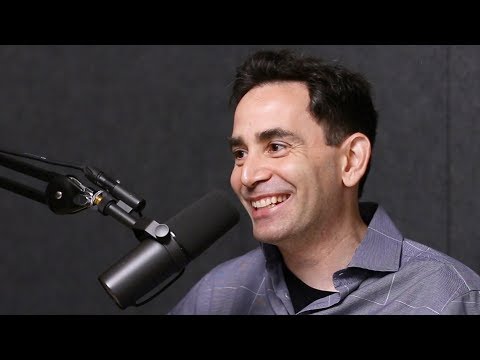
After moving to Silicon Valley during the dot-com crash, Gil got his start by offering to work for free at a software startup. At Google, he helped start mobile efforts and build early teams; later, Mixer Labs was acquired by Twitter, where he helped scale the company from about 90 to 1,500 people. He then co-founded Color Genomics.
A Conversation
Speaker
Elad Gil, startup founder and investor, discusses product-market fit, company building, fundraising, and investing with Y Combinator’s host at Startup School.
Gil says the early priority is building something customers want. Signs of fit include strong retention even when a product is unreliable, major companies adopting and paying for a SaaS product, and unusually strong customer feedback. He also points to sustained organic growth, such as 20% monthly growth from a small user base.
Mixer Labs changed from a consumer location-content product to infrastructure for geolocation applications. Gil advises founders to build early, learn from customer reactions, and avoid staying in stealth for years. He also recommends acting promptly when a hire is a poor fit and making the development setup easy enough that new teammates can run the product quickly.
Gil says it can be difficult to distinguish a temporary setback from a lasting lack of traction, but founders should periodically assess whether to continue. When considering a pivot, they should ask whether the market is attractive and the product is wrong, or whether the market itself is weak. He argues that market conditions often outweigh team quality and cautions against plans that depend on several unlikely steps.
Gil describes Mixer Labs’ fundraising as taking two to three months and advises founders to check investor references, including from companies that struggled or shut down. For investor meetings, he recommends getting quickly to the product, market, team, and a demo. He also suggests monthly investor updates that lead with specific requests and include metrics and remaining cash.
Takeaways
- Look for retention, organic growth, paying customers, and strong feedback as evidence of product-market fit.
- Build early and make it easy for customers and teammates to give you useful feedback.
- Reassess the market and product separately before deciding to pivot or continue.
- Check investor references from companies with varied outcomes before taking capital.
- Keep investor updates monthly, lead with requests, and include runway.
Mentioned in this talk
 Google
 TwitterMixerLabsColor
 HP
 Andreessen HorowitzNetscape
 MetaZeppelin
 PagerDuty
 Airtable
 TwilioTomTom
 Yelp
 SequoiaKhosla Ventures
 AirbnbThe 5 Types of Wealth
 GmailGoogle Mobile
 Google MapsGIP
 AndroidGPSproduct-market fitBen HorowitzEric SchmidtSteve Jobs
 Mark ZuckerbergMichael DearingReid HoffmanJoe LonsdalePaul GrahamMarc Andreessen
Search inside this talk
What was claimed 17
- acquired
“the company was acquired by Twitter”
YouTube Verified2 sources· Talk, Web· archived
- previously atWorked on ads targeting and mobile
“He's worked at Google and Twitter”
YouTube Verified2 sources· Talk, Web· archived
- previously atVP of Corporate Strategy
“He's worked at Google and Twitter”
YouTube Verified2 sources· Talk, Web· archived
- foundedCo-founder and CEO
“I left Google to start a very early data infrastructure company called Mixer Labs.”
YouTube Verified5 sources· Talk, Web· archived
- built
“the book ... was geared toward employees, executives, or founders going through high growth”
0:17inAdvice from the High Growth Handbook, a Guide to Scaling StartupsYouTube Verified2 sources· Talk
- role at
“I joined Google in 2004 and effectively started the mobile team there.”
YouTube Unverified1 source· Talk
- acquired
“I helped buy Android”
YouTube Unverified1 source· Talk
- builtElad Gil built Google Mobile
“I helped buy Android and pulled together the early teams for Google Mobile”
YouTube Unverified1 source· Talk