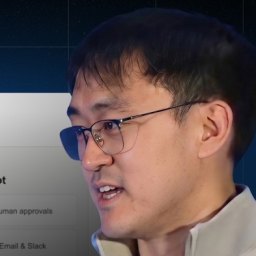
Amplitude was skeptical through 2023 because model capabilities seemed uneven and outside pressure to announce an AI strategy felt premature. Seeing AI tools improve software engineering helped make the opportunity concrete. In October 2024, a new engineering leader, Wade Chambers, and the acquisition of Command AI helped the company start moving in earnest.
How Amplitude Went From Skeptics to “All In” on AI
Speaker
Spencer Skates, CEO and co-founder of Amplitude, joins Y Combinator’s The Light Cone to discuss how Amplitude moved from AI skepticism to rebuilding analytics around AI.
Skates said Amplitude’s first priority was teaching its organization what AI could do, especially in engineering. At an AI Week in June, leaders demonstrated tools, then teams spent the rest of the week using Cursor and other tools on existing work. He said the aim was to build understanding and belief before deciding what AI products to make.
Skates contrasted SaaS product development, which often starts by asking customers what they need, with AI development, where teams first need to learn what models can do. He said customers may request ideas that are impossible or poorly suited to the technology. At the same time, AI-native teams need to understand the customer problem and the expertise accumulated in existing products.
Some of Amplitude’s AI work grew from employee experiments: an engineer built the MCP server, and another created AI Visibility, which doubled signups to the free plan, according to Skates. The company planned Ask AI, a chat interface for charts and data analysis, while continuing work on session replay, experimentation, and other products. Skates described four priorities for the following year, including making Amplitude AI-native, easier to use, and stronger for marketers.
Skates said users need to adjust their expectations because AI tools can fail and may require rephrasing or trying another model. He argued that this makes AI less suited to workflows where records must be dependable, such as CRM, and that SaaS remains valuable for those needs. For business AI, he highlighted the challenge of letting people review and correct outputs instead of expecting agents to handle entire workflows flawlessly.
Takeaways
- Train teams on AI tools through hands-on work before settling on product ideas.
- Start AI product discovery by testing model capabilities, then connect them to customer problems.
- Pair AI-native experimentation with deep knowledge of the existing product and its users.
- Let useful employee experiments grow into dedicated projects, while continuing foundational product work.
- Design business AI workflows so people can inspect and correct results where reliability matters.
Mentioned in this talk


Search inside this talk
What was claimed 12
- ceo ofSpencer Skates CEO of
 Amplitude
“CEO and co-founder of Amplitude”
YouTube Verified2 sources· Talk
- foundedSpencer Skates foundedAmplitude
“CEO and co-founder of Amplitude”
YouTube Unverified1 source· Talk
- uses
“if you were using Cursor to start”
YouTube Unverified1 source· Talk
- role atWade Chambers is engineering leader atAmplitude
“I hired a new engineering leader, Wade Chambers”
YouTube Unverified1 source· Talk
- acquiredAmplitude acquired Command AI
“we acquired Command AI”
YouTube Unverified1 source· Talk
- launchedAmplitude launched
 Figma MCP server
“We just launched a whole bunch of AI products”
YouTube Unverified1 source· Talk
- launchedAmplitude launched AI Visibility
“We just launched a whole bunch of AI products in the last few weeks”
YouTube Unverified1 source· Talk
- launchedAmplitude launched Amplitude Feedback
“We just launched a whole bunch of AI products”
YouTube Unverified1 source· Talk