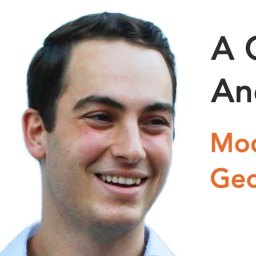
Nathoo says founders need to understand how much of the company they have sold and still own, even when investments have not yet become shares. A simple spreadsheet can track who owns how many shares, and founders remain responsible for understanding the cap table.
Understanding SAFEs and Priced Equity Rounds
Speaker
Kirsty Nathoo, CFO and partner at Y Combinator, explains SAFEs, dilution, and priced equity rounds to a Startup School audience.
A SAFE gives an investor a promise of future shares in exchange for money now. Nathoo says its main negotiation points are the investment amount and valuation cap; unlike convertible debt, a SAFE has no interest rate or maturity date. The document also covers conversion in a priced round, a company sale, or a shutdown.
Post-money SAFEs make it easier to estimate the ownership sold: investment amount divided by the post-money valuation cap. In Nathoo's example, two investments of $200,000 at a $4 million cap and $800,000 at an $8 million cap give investors 5% and 10%, or 15% combined. Founders should account for that dilution even before the SAFEs convert into shares.
Nathoo walks through a company with a $15 million pre-money valuation raising $5 million, for a $20 million post-money valuation. The SAFEs convert first, the option pool is increased to 10%, and then the new investors buy shares. In the example, the lead investor owns 20%, all Series A investors own 25%, and the founders own 51.5% after closing.
Nathoo recommends avoiding a mix of SAFEs and convertible notes because it complicates the calculations, and says companies with pre-money SAFEs can still use post-money SAFEs later. She cautions founders against pushing valuation caps too high: in her example, raising one cap from $8 million to $10 million changed founder ownership at closing from 51.5% to 52.7%.
Takeaways
- Track SAFE ownership estimates alongside the issued shares on your cap table.
- For a post-money SAFE, estimate ownership as the investment amount divided by the valuation cap.
- Model option pool changes and SAFE conversion before judging founder ownership after a priced round.
- A SAFE cap above the later round's price can result in greater SAFE dilution than expected.
- Weigh a higher valuation cap against the time and effort spent negotiating it.
Mentioned in this talk
Search inside this talk
What was claimed 9
- role atKirsty Nathoo is CFO at
 Y Combinator
“I’m the CFO here at Y Combinator.”
0:00inManaging Startup FinancesYouTube Verified3 sources· Talk
- metricKirsty Nathoo: Worked with probably over 1,500 companies
“I've now worked with probably over 1,500 companies”
YouTube Unverified1 source· Talk
- featureCarta: Helps companies keep track of cap tables.
“tools like CapTable.io and Carta can also help you keep track”
YouTube Unverified1 source· Talk
- featureCapTable.io: Helps companies keep track of cap tables.
“tools like CapTable.io and Carta can also help you keep track”
YouTube Unverified1 source· Talk
- feature
 SAFE: Investor provides money now in exchange for a promise of shares at a future priced round.
“the investor gives you money now in exchange for a promise from the company to give shares to the investor at a future date”
YouTube Unverified1 source· Talk
- featureSAFE: Typically has two negotiating points: investment amount and valuation cap.
“how much money the investor will put into the company and at what valuation cap”
YouTube Unverified1 source· Talk
- featureSAFE: Not debt; it has neither an interest rate nor a maturity date.
“SAFEs have neither of those things”
YouTube Unverified1 source· Talk
- featureY Combinator: Publishes a SAFE document for founders and investors.Publishes a SAFE document for founders and investors.
“the SAFE on the Y Combinator website”
YouTube Unverified1 source· Talk