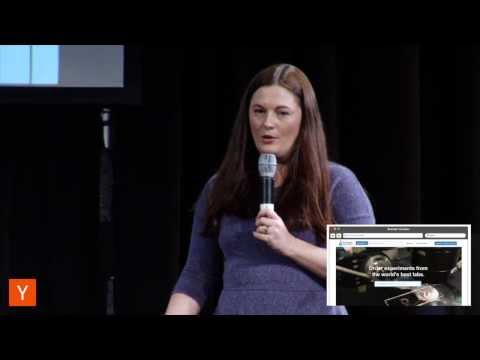
Jopwell helps companies broaden their applicant pools by connecting them with Black, Latino, Hispanic, and Native American students and professionals. Braswell saw a mismatch between companies claiming they could not find this talent and the people he knew in his community. His experience entering finance through early access programs helped him recognize how unusual that path was.
Funding Is an Outcome of Building a Good Business
Speaker
Porter Braswell, co-founder and CEO of Jopwell, discusses building a career platform for Black, Latino, Hispanic, and Native American talent with a Y Combinator host.
Unable to build the product himself, Braswell and co-founder Ryan pitched companies with a deck and got several soft commitments, formalized in one-page letters of intent. They raised $500,000 from family, friends, and their networks in about six weeks, then hired their first engineer and grew to a four-person team. After Techstars rejected them, they launched in January, gained traction, and later joined YC.
Braswell describes Jopwell as a referral at scale for candidates who may lack connections inside companies. Its profile information, including interests, preferred work environment, and career history, helps surface roles candidates may not have considered. The platform focuses mainly on entry- and mid-level talent, and its community has grown through word of mouth, events, and partnerships.
Braswell says founders should focus on customers, traction, and a product people want rather than treating fundraising as the goal. Jopwell had little reason to apply to accelerators before it had a business, but later raised $3.5 million after gaining traction and joining YC. He also advises founders to consider earning revenue, such as making their first $100,000, before assuming venture capital is necessary.
As Jopwell grew from a small team toward 15 to 20 employees, Braswell had to shift from being a friend to acting clearly as CEO. He says the CEO must keep the company’s vision and priorities understood while giving people feedback. At 35 employees, he protects time for focused work and uses regular coffee meetings with employees to listen and learn.
Takeaways
- Start with a specific customer problem you understand well.
- Use early customer commitments to guide what you build.
- Treat funding as a possible result of traction, not the target.
- Test whether customer revenue can support the business before pursuing venture capital.
- As the team grows, make the company’s direction and priorities clear.
Mentioned in this talk

Search inside this talk
What was claimed 11
- feature
 Morgan Stanley: Diversity internship program
“Morgan Stanley was offering a diversity internship program.”
YouTube Unverified1 source· Talk
- role atPorter Braswell is currency trader at
 Goldman Sachs
“I was there for three years buying and selling currencies.”
YouTube Unverified1 source· Talk
- previously atPorter Braswell previously atGoldman Sachs
“I spent three summers interning at Goldman Sachs, then started my career there.”
YouTube Unverified1 source· Talk
- builtJopwell built
 BAND platform
“We could build a platform for people of color and leverage technology to directly connect them with opportunities.”
YouTube Unverified1 source· Talk
- foundedPorter Braswell founded Jopwell
“My co-founder and I decided that we could make a solution for this.”
YouTube Unverified1 source· Talk
- metricJopwell: $500,000 raised from family, friends, and networks over about a month and a half
“we were able to raise $500,000 from family, friends, and networks”
YouTube Unverified1 source· Talk
- invested in
 Y Combinator invested in Jopwell
“we applied to YC for the summer session. And we got in.”
YouTube Unverified1 source· Talk
- launchedJopwell launchedBAND platform
“We launched the platform in January.”
YouTube Unverified1 source· Talk
- ceo ofPorter Braswell CEO of JopwellCEO
“what it's like being the CEO of this company”
YouTube Unverified1 source· Talk
- metricJopwell: $12 million in funding and 35 employees
“Now we're $12 million in funding, a Series A company with 35 employees.”
YouTube Unverified1 source· Talk
- metricJopwell: $3.5 million raised on Demo Day
“10 weeks later we raised $3.5 million on Demo Day.”
YouTube Unverified1 source· Talk