Brown describes learning to take initiative at early startups, where the team had to find its own direction. After Grouper struggled against Tinder’s better solution to the same problem, he spent six months studying machine learning, linear algebra, and statistics before joining OpenAI to build a StarCraft environment.
Anthropic Co-founder: Building Claude Code, Lessons From GPT-3 & LLM System Design
Speaker
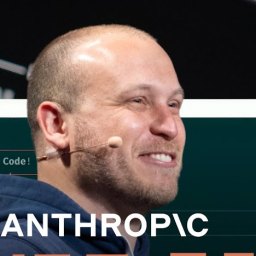
Tom Brown, co-founder of Anthropic, talks with Y Combinator’s The Light Cone host about his path into AI, Anthropic’s products and infrastructure, and lessons from building Claude Code.
At OpenAI, Brown shifted toward scaling after seeing research showing that more compute, with the right training recipe, reliably improved model capability. He says the safety and scaling teams that founded Anthropic took the stakes seriously, though the seven co-founders initially had little certainty about what product to build.
Brown focused early at Anthropic on training infrastructure and securing compute. The team hesitated to build serving infrastructure before ChatGPT launched, a delay he describes as a lesson. Claude 3.5 Sonnet’s coding performance brought stronger demand, and Claude Code began as an internal tool built by engineer Boris for developers at Anthropic.
Brown says Claude Code’s team treated Claude itself as a user, giving it tools and context to work effectively. He sees a broader opportunity in helping models handle business tasks that require context and coaching, beyond pair programming. Anthropic also aims to offer a strong API platform for developers building those tools.
Brown describes power as a major bottleneck for data center growth in the US and supports making it easier to build data centers. Anthropic uses GPUs, TPUs, and Trainium to increase capacity and match hardware to workloads, while accepting the added engineering effort. His advice to younger people is to take more risks and work on things they would be proud to succeed at.
Takeaways
- Early startup work can teach initiative by making teams responsible for finding their own direction.
- When a product idea is uncertain, build the infrastructure needed to serve it before demand becomes obvious.
- Treat the model as a user: provide tools and context that let it work effectively.
- Look beyond coding for business tasks that models can do with coaching and context.
- Multiple hardware platforms can add capacity and workload flexibility, but require more performance engineering.
Mentioned in this talk





Search inside this talk
What was claimed 10
- built
 Anthropic built
 Claude Code
“every major model provider building Claude Code, Codex, Gemini CLI”
0:14inBuilding an ACP-Compatible Agent LiveYouTube Verified15 sources· Talk, GitHub, Job posting, Web· archived
- founded
“Anthropic co-founder Tom Brown”
YouTube Verified2 sources· Talk, Web· archived
- previously at
“I joined OpenAI about a year later”
YouTube Unverified1 source· Talk
- builttraining engineering
“build a lot of the engineering around training GPT-3”
YouTube Unverified1 source· Talk
- previously atTom Brown previously at
 Google Brain
“left, went to Google Brain for a year, and came back”
YouTube Unverified1 source· Talk
- metricAnthropic: About 2,000 people
“We’re about 2,000 people now”
YouTube Unverified1 source· Talk
- uses
“Thousands.”
24:22inAnthropic Head of Pretraining on Scaling Laws, Compute, and the Future of AIYouTube Verified2 sources· Talk
- featureClaude Code: Helps engineers use Claude as a pair programmer or junior engineer
“Claude Code is about how to get Claude to be a useful pair programmer, or junior engineer”
YouTube Unverified1 source· Talk
- uses
“We use GPUs, TPUs, and Trainium”
YouTube Unverified1 source· Talk
- uses
“We use GPUs, TPUs, and Trainium”
YouTube Unverified1 source· Talk