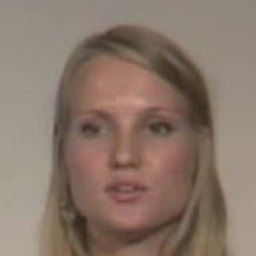
Sršen describes leaving medical school to study fine art sculpture, where she focused on shaping physical materials with her hands. She says founding a company felt personal and emotionally demanding, much like making art: others evaluate the work, and founders must revise it and keep going.
Urska Srsen
Speaker
Urška Sršen, co-founder and head of design at Bellabeat, describes building pregnancy self-tracking products and growing the company with her co-founder, Sandra, from Europe through Y Combinator in the United States.
Bellabeat began as an effort to build a professional remote monitoring system with input from Sršen’s mother, an OB-GYN and department head in Ljubljana. The team found that their technically capable prototype was too complicated to implement and did not engage patients. They shifted to a consumer product designed to make pregnancy tracking accessible and social, including a device and app for listening to a baby’s heartbeat.
Sršen argues that wearables could help bring reliable health data into everyday routines and eventually connect consumer products with professional healthcare. She sees pregnancy as a useful starting point for preventive care, including efforts to reduce risks associated with obesity, inactivity, and stress.
The founders found Europe fragmented and difficult to navigate, but said starting with few resources made them resourceful. While short on money and marketing experience, Bellabeat entered the 2013 Pioneers Festival competition, won, met Michael Seibel, and applied to Y Combinator. The team moved to the United States within two weeks of meeting him.
Moving to the United States brought new challenges, including serving customers in English, but the team kept working, speaking with customers, and improving the product. By YC Demo Day, Bellabeat had sold more than 8,000 devices and expanded into the US market; the company closed a seed round two weeks later. Sršen credits the team, execution, customer feedback, and the resilience built through earlier setbacks.
Takeaways
- Start from the user’s experience; a technically sound system can still be too difficult to adopt.
- Make tracking feel useful and emotionally engaging when asking people to build a new health habit.
- Use customer conversations to guide product improvements and earn traction.
- Working with limited resources can build resilience and practical problem-solving skills.
- A strong team and steady execution help founders persist through rejection and market challenges.
Mentioned in this talk

Search inside this talk
What was claimed 10
- foundedUrška Sršen founded Bellabeat
“Urška Sršen, who is the co-founder of Bellabeat.”
YouTube Unverified1 source· Talk
- featureBellabeat: lets future moms listen to their baby’s heartbeat and share the experiencelets future moms listen to their baby’s heartbeat and share the experience
“allows future moms to listen to their baby’s heartbeat and share the experience”
YouTube Unverified1 source· Talk
- founded
“Sandra and I started the company in 2012.”
YouTube Unverified1 source· Talk
- role atUrška Sršen is head of design at Bellabeat
“I’m the head of design, head designer, head of product.”
YouTube Unverified1 source· Talk
- metricBellabeat: Sold thousands of devices
“have sold thousands of our devices”
YouTube Unverified1 source· Talk
- metricBellabeat: Team of 20 people
“right now we’re a team of 20 people”
YouTube Unverified1 source· Talk
- builtworking prototype
“we managed to get to a working prototype”
YouTube Unverified1 source· Talk
- applied toBellabeat applied to
 Y Combinator
“Luckily, we applied and got accepted”
YouTube Unverified1 source· Talk
- metricBellabeat: Sold more than 8,000 devices by Demo Day
“we’d already sold more than 8,000 devices”
YouTube Unverified1 source· Talk
- metricBellabeat: Built a working prototype with less than $5,000
“We built our prototype—a working prototype—with less than $5,000”
YouTube Unverified1 source· Talk