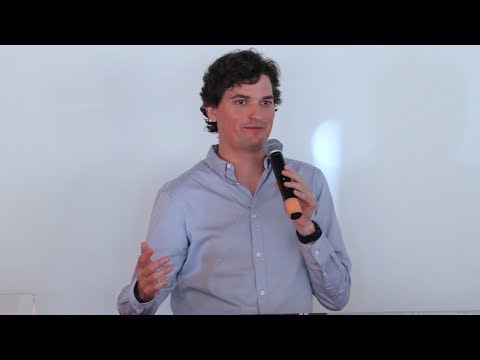
Levy describes the SAFE as a short agreement for early-stage companies raising money before a priced round. It is not a loan: it accrues no interest and has no repayment date. Investors and founders generally negotiate the investment amount and a valuation cap; other versions use a discount or an MFN clause.
Startup Investor School Day 1
Speakers
Carolynn Levy, YC attorney and creator of the SAFE, and Kirsty Nathoo, YC CFO, explain how startup investors use SAFEs, how they convert, and what investors should check during the process.
Nathoo explains that the cap sets the highest valuation used to calculate a SAFE’s conversion price, rather than stating the company’s current value. In her example, $800,000 invested at an $8 million cap converts into just over 1 million shares; a later $4 million round at a $16 million pre-money valuation dilutes the SAFE investor to just over 7% ownership. She recommends modeling different round scenarios because ownership depends on the options pool and new investment.
Nathoo explains that in a high-value acquisition or IPO, SAFE holders convert into common shares and share in proceeds; in an acquihire, they can choose between conversion and repayment. If the company dissolves, SAFE holders are paid after creditors and employee salaries, if funds remain. The SAFE does not address a company that remains profitable without raising or being acquired, so Levy advises against using it for lifestyle businesses.
Nathoo recommends confirming the investment amount and cap by email before signing, then checking the SAFE’s terms and investor name carefully. Investors should be ready to wire funds promptly after signing. At conversion, they should review the pro forma cap table and conversion calculations, and make sure contractual rights such as pro rata are honored.
Levy advises investors to focus on the possibility of large returns, help founders in ways they ask for, and accept that companies may fail or pivot. Nathoo emphasizes that a SAFE is not debt and investors cannot demand repayment just because a company changes direction. Both recommend patience and working with founders to understand dilution and conversion.
Takeaways
- Model SAFE conversion scenarios before investing; the cap alone does not determine your eventual ownership.
- Check the conversion calculations and pro forma cap table when a priced round closes.
- Confirm investment terms and investor details before signing, and be prepared to wire promptly.
- Review your SAFE’s contractual rights, including pro rata rights, when conversion documents arrive.
- Expect pivots and possible failure; a SAFE does not provide a right to demand repayment.
Mentioned in this talk
Search inside this talk
What was claimed 10
- role atKirsty Nathoo is CFO at
 Y Combinator
“I’m the CFO here at Y Combinator.”
0:00inManaging Startup FinancesYouTube Verified3 sources· Talk
- role atCarolynn Levy is attorney atY Combinator
“my colleagues Carolynn Levy and Kirsty Nathoo”
YouTube Unverified1 source· Talk
- builtCarolynn Levy built
 SAFE
“Carolynn is the person who actually invented the SAFE”
YouTube Unverified1 source· Talk
- previously atCarolynn Levy previously at Wilson Sonsiniattorney
“She used to be an attorney at Wilson Sonsini”
YouTube Unverified1 source· Talk
- featureSAFE: Converts into stock in a future equity financing; it is not debt and does not accrue interest.
“It is not debt; it does not accrue interest”
YouTube Unverified1 source· Talk
- featureSAFE: Includes a pro rata right to buy shares in a future round after the conversion round.
“the right to buy more stock in future rounds”
YouTube Unverified1 source· Talk
- featureAngelCalc: Models SAFE conversion scenarios.
“modeling software that allows you to see various different scenarios”
YouTube Unverified1 source· Talk
- featurehandshake protocol: Uses email to confirm the investment amount and valuation cap.
“sets out the key terms in writing”
YouTube Unverified1 source· Talk