Petersen explains that freight moves through a relay of trucking companies, warehouses, ports, and carriers, rather than one company’s end-to-end network. Flexport structures the information passed between those parties so customers and logistics partners can see shipments and coordinate work.
Building Flexport, a Modern Freight Forwarder
Speaker
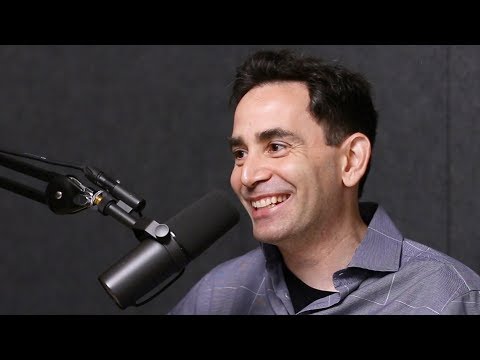
Ryan Petersen, Flexport’s co-founder and CEO, talks with Y Combinator about building a technology-enabled freight forwarder and scaling its business and team.
Before committing to Flexport, Petersen used landing pages to see whether people wanted ideas such as software for importers and an online freight forwarder. He says Flexport began as a side project while he waited three years for a federal license; before launch, companies including Foxconn, Cargill, and Saudi Aramco signed up through its website. He emphasizes validating demand and finding ways to fund experiments without relying on investors.
As Flexport expanded across offices, Petersen described hiring locally, sending groups of employees to help open new locations, and encouraging people to change roles. He said the main challenge was fulfilling demand in a complex, regulated industry, where good processes and managers matter. He defined a strong culture in terms of engaged employees who find value, learning, and growth in their work.
Petersen said most Flexport sales were outbound, and the company won customers by offering more visibility and control over freight. His approach to entrepreneurial sales was to learn what a prospect would need in order to switch, then build requests that made sense for many customers rather than custom features for one. He described automation as letting customers and logistics partners submit data directly, reducing the manual work of collecting and entering documents.
Petersen advised founders to build through small wins that accumulate, rather than depend on a master plan. He traced Flexport’s progress through steps including joining Y Combinator, attracting investment, hiring a CTO, and building a product that brought in customers. He also urged founders to limit fundraising to what they need and consider the interests of customers, vendors, employees, investors, regulators, and communities.
Takeaways
- Test demand with a simple landing page before investing heavily in an idea.
- Find a way to fund early experiments that gives you time to learn.
- Use customer requests to guide the roadmap, but prioritize improvements that help many customers.
- In distributed operations, pair local hiring with clear processes and experienced industry knowledge.
- Build momentum through small wins, and raise only the capital the business needs.
Mentioned in this talk


Search inside this talk
What was claimed 15
- foundedRyan Petersen founded Flexport
“He went through YC in 2014”
0:36inAI Is Eating LogisticsYouTube Verified2 sources· Talk
- featureFlexport: Structures freight handoff data into a platform for the parties in a shipment chain
“we're taking all that data, structuring it, and creating a platform”
YouTube Unverified1 source· Talk
- metricFlexport: About 2,000 merchants that sell on Amazon use Flexport
“We have about 2,000 merchants that sell on Amazon and use us”
YouTube Unverified1 source· Talk
- metricFlexport: About 10% of shipments are delivered to Amazon warehouses
“Probably about 10% of Flexport shipments get delivered to an Amazon warehouse”
YouTube Unverified1 source· Talk
- foundedRyan Petersen founded ImportGenius
“My first business after business school... was called ImportGenius.com”
YouTube Unverified1 source· Talk
- uses
“The earliest customers for Flexport came via Google AdWords and SEO”
YouTube Unverified1 source· Talk
- uses
“The earliest customers for Flexport came via Google AdWords and SEO”
YouTube Unverified1 source· Talk
- role atRyan Petersen is CEO at Flexport
“My CEO and business partner”
YouTube Unverified1 source· Talk