Top-down sales starts by getting a decision-maker’s attention, confirming their problem, and showing that the product can solve it. The process then moves through procurement, contract signing, and onboarding. Pete says this approach often suits products tied to executives’ goals, especially when they are expensive to implement or need significant support.
Which Sales Strategy Is Best For Your Startup?
Speaker
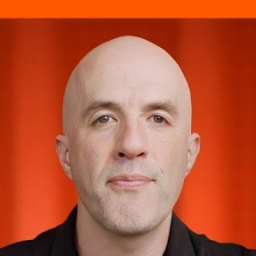
Pete, a visiting group partner at Y Combinator and former co-founder and CTO of Optimizely, explains how startups can choose between top-down and bottoms-up sales.
A defined sales playbook can make top-down selling predictable, and executive customers may have strong early retention. But large customers can pull a startup into building one-off features that turn the relationship into consulting. Scaling also requires an expensive enterprise sales team, which Pete says usually makes products below about $10K for mid-market or $100K for enterprise difficult to sell profitably.
Bottoms-up sales begins with a self-serve product that users can adopt without a salesperson, paired with a low-cost way to reach many potential users. Slack is an example: small teams could start using it independently, and adoption could spread through an organization before sales reached out. Once usage grows, a company can sell contracts, additional features, or bulk pricing to the users’ employers.
Viral growth is difficult, and bottoms-up companies still need salespeople; existing product use can make their sales cycles more efficient. Pete advises talking to early customers, removing friction from the product, clarifying the landing page, and watching users complete onboarding. He also recommends measuring funnel drop-off, using A/B tests, and offering individual features free while charging for team collaboration features.
Top-down sales sells expensive products to executives, while bottoms-up sales builds individual usage that can lead to company contracts. Pete says neither approach is inherently better, noting a roughly even split among top YC B2B SaaS companies. The right motion depends on whether the product’s value resonates more with executives or with individual users and small teams.
Takeaways
- Choose a sales motion based on who feels the problem most strongly: executives or individual users.
- For top-down sales, define target companies and decision-makers before building a lead pipeline.
- Watch for one-off enterprise requests that could turn a repeatable product into consulting work.
- For bottoms-up sales, reduce onboarding friction and measure where users drop out.
- Use free individual features and charge for collaboration when team adoption is the path to company sales.
Mentioned in this talk


Search inside this talk
What was claimed 9
- previously atPete previously at Optimizelyco-founder and CTO
“formerly co-founder and CTO at Optimizely”
YouTube Unverified1 source· Talk
- role atPete is visiting group partner at
 Y Combinator
“I'm a visiting group partner at Y Combinator”
YouTube Unverified1 source· Talk
- featuretop-down sales: Usually starts with a decision-maker high up in an organization
“starts with a decision-maker high up in an organization”
YouTube Unverified1 source· Talk
- metrictop-down sales: Typical floor price: around $10K for mid-market and $100K for enterprise
“usually around $10K for mid-market and $100K for enterprise”
YouTube Unverified1 source· Talk
- featuretop-down sales: Often requires an enterprise sales team to scale, creating high costs
“the only way to scale that motion is by building out an enterprise sales team”
YouTube Unverified1 source· Talk
- featurebottoms-up sales: Begins with a self-serve product and aims to convert organizations after users adopt it
“start by building a self-serve product that people can adopt on their own”
YouTube Unverified1 source· Talk
- feature
 Slack: Small teams could adopt it without talking to a salesperson, and it spread within organizations
“Small teams could adopt Slack on their own”
YouTube Unverified1 source· Talk
- featurebottoms-up sales: Can create an efficient sales cycle when prospects already use the product
“build a really efficient sales cycle when your prospects are already using your product”
YouTube Unverified1 source· Talk