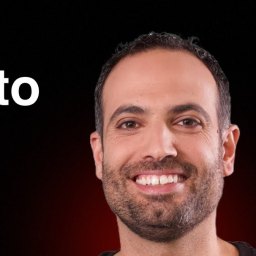
Cohen says LinkedIn grew from fewer than 100 million members when he joined to well over one billion. The company shifted its feed from job updates toward matching people who share useful knowledge with people seeking it. He describes the feed’s goal as supporting knowledge exchange and economic opportunity.
LinkedIn’s Chief Product Officer on Growing to 1B Users with AI
Speaker
LinkedIn Chief Product Officer Tomer Cohen joins Peter Yang to discuss LinkedIn’s growth, knowledge sharing, AI product principles, and product leadership.
Cohen says LinkedIn brought feed and relevance work together and moved beyond click-through rate as its main objective. The team first emphasized conversation starters, then looked further downstream at strong connections and meaningful conversations after spammers exploited viral actions. He says AI objectives should account for unintended effects such as spam and filter bubbles.
LinkedIn is investing in short-form video, newsletters, and events as ways for people to share and discover expertise. Cohen reports nearly 200,000 newsletters, 750 million subscriptions, and more than 150 million people subscribing to newsletters on the platform. He says subscriptions and event notifications can help creators build audience relationships beyond feed ranking.
Cohen advises product leaders to define nuanced user outcomes, give AI systems room and time to learn, and treat quality data collection and fine-tuning as core product work. For job recommendations, he says success means helping someone find a suitable job, not simply earning a click or application. He recalls spending months cleaning feed content and creating quality examples to train the AI.
Cohen values people who dream, execute, and keep learning, and says an owner mindset means caring enough to tackle unglamorous work. He recommends keeping organizations small and flat where possible, questioning processes, and addressing system friction rather than assuming individuals are at fault. For career growth, he suggests pursuing work that combines personal interest with likely demand and offers strong learning opportunities.
Takeaways
- Define AI objectives around lasting user outcomes, then consider what could go wrong if the metric succeeds.
- Treat quality training data as product work that can materially improve the experience.
- Give AI products time to learn and improve; their behavior is not fully deterministic.
- Use multiple ways for creators to reach audiences, including subscriptions and events.
- Build career momentum by choosing work that offers learning and aligns with your interests.
Mentioned in this talk


Search inside this talk
What was claimed 16
- role atTomer Cohen is Host at Building One
“also host of the Building One podcast”
YouTube Unverified1 source· Talk
- role atTomer Cohen is Chief Product Officer at
LinkedIn
“Tomer is the chief product officer of LinkedIn”
YouTube Unverified1 source· Talk
- feature
“we exist to create economic opportunity”
YouTube Unverified1 source· Talk
- metric
“now we’re well north of a billion members”
YouTube Unverified1 source· Talk
- metric
“13,000 connections are made”
YouTube Unverified1 source· Talk
- metric
“seven people are hired”
YouTube Unverified1 source· Talk
- metric
“close to 140 hours of learning content are consumed”
YouTube Unverified1 source· Talk
- metric
“Every minute on LinkedIn, 1.5 million updates are viewed”
YouTube Unverified1 source· Talk